
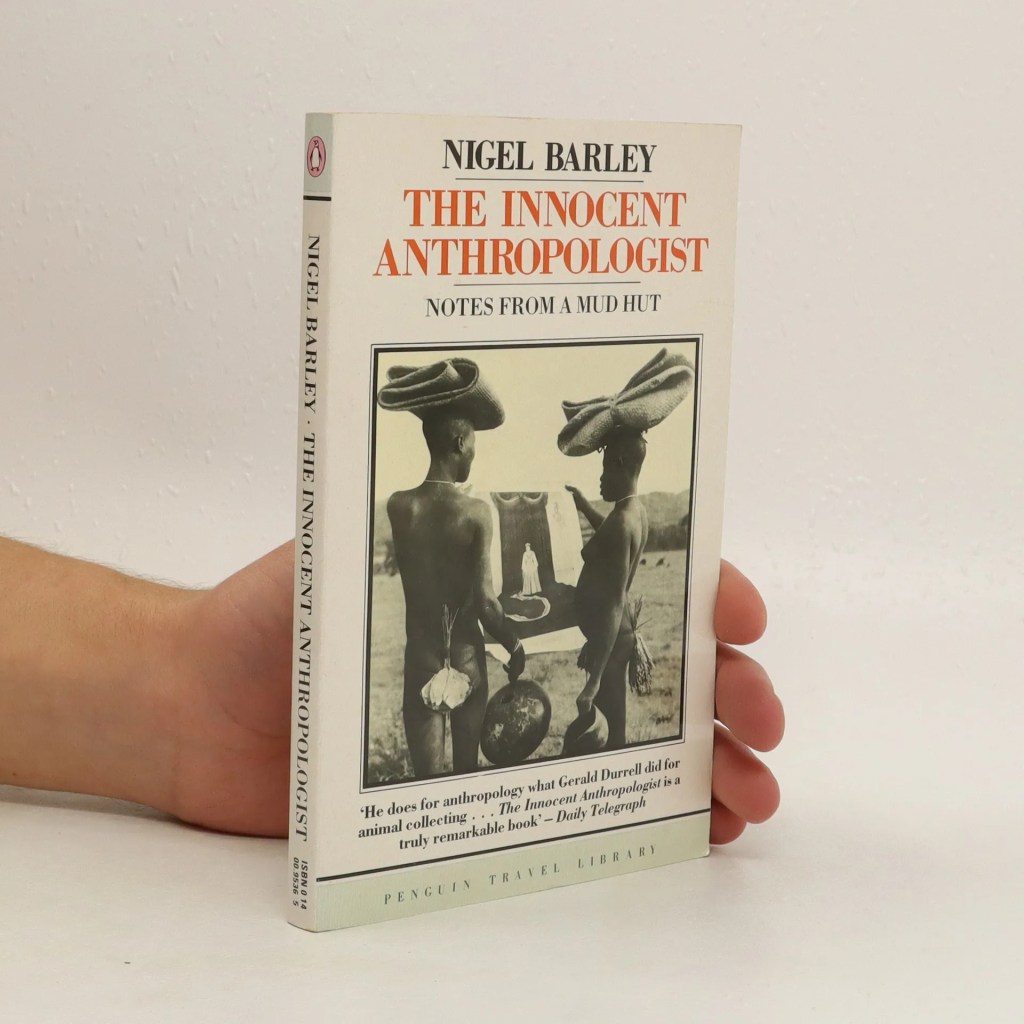
Let me start by recommending a delightful read: The Innocent Anthropologist by British anthropologist Nigel Barley. First published in 1983, the book recounts his two field trips to the mountains of Cameroon, where he lived among the Dowayo people. It’s a fieldwork account, yes—but one told through a lens of quintessentially British humor.
Now, let’s get back to the writing.
For most social science PhD students, fieldwork serves as a major milestone in their doctoral journey. The entire process is often neatly divided into three phases: before, during, and after fieldwork. The preparations that take place beforehand go far beyond refining a research proposal—they also involve wading through piles of paperwork: research ethics applications, risk assessments, data management plans, international travel insurance…Lately, I’ve been locked in battle with these very forms.
I imagine myself as a pessimistic person with mild paranoia. I have Plan A, B, C, and D, prepared for everything from losing my wallet to break-ins, from food poisoning to car accidents, from global pandemics to natural disasters. I carefully rate every possible risk and provide detailed explanations of how I plan to mitigate them. For example, I note that I’ve lived in the U.S. for seven years; I promise to carry a power bank and regularly check in with my contacts (family or supervisor); I will take good care of myself and maintain a healthy work-life balance…

Of course, besides protecting myself, another crucial part of preparation is thinking about how to “protect” research participants—although this term is now often criticized for implying that participants are powerless or lack agency in their own lives. Perhaps a better framing is “no harm, no fuss.” If conditions allow, it’s even better to actively involve participants in the process, letting them take on more significant roles (as in participatory research).
If your study is low-risk, your participants aren’t coerced in any way, and your conversations don’t touch on sensitive or potentially retraumatizing topics, then filling out ethics forms might feel like an exercise in over-cautiousness. In other words, someone with basic social awareness and a decent level of emotional intelligence is probably already an ethical researcher. After all, if the weather is bad, I’ll reschedule the interview; if a participant doesn’t want to continue, I won’t push them—and I’ll remind them that they’re free to walk away at any time…
After all this painstaking desk work, I may look like a well-prepared fieldworker. These “plans” even make my research seem like an impossible mission—sometimes I can’t help but hear the Mission: Impossible theme music playing in my head while filling out the forms, fully fired up. And yet, after finishing them, I’ve had days when I completely forgot what my research was actually about.
As you’re planning all this, every seasoned fieldworker will tell you: “No plan can survive the first contact with the field.”
A good researcher should prepare thoroughly—but also be ready to throw those plans out the window when faced with reality on the ground. The change might be minor, like struggling to recruit enough participants. Or it could be major, like finding that your data collection method doesn’t work at all. When that happens, experienced fieldworkers just shrug and say: “See? I knew it.”
My “Fieldwork” Experience So Far
Looking back on my very limited experiences that could technically be called “fieldwork,” they mostly hovered somewhere between suspected espionage and bothering local residents. Here’s my modest record:
Elderly folks in the hutong (1 hour):
I asked them what inconveniences they experienced in daily life (mainly because they were the only ones home during the day, as everyone else was at work). They replied, “Every year, students like you come and ask questions, but nothing ever changes. You don’t need to waste your time doing useless things—just focus on your studies.”
Conclusion: Living conditions need improvement—starting with the physical environment (After all, I was working on a hutong renovation project.)
Sun-chasing seniors in a residential complex (2 hours):
In the afternoons, elderly residents would shuffle their stools around to follow the sun. I followed them around too—pretending to be casual while sneakily taking photos from a distance as proof of my presence. Eventually, I mustered up the courage to ask about their movement patterns.
Conclusion: Seniors love sunbathing—residential areas need more sunlit public spaces.
Pedestrian counting on a commercial street (6 hours):
I stationed myself along a busy commercial street at different times throughout the week, counting how many people passed by certain segments within set time periods. This eventually turned into a rhythmic map of pedestrian vitality.
Conclusion: The energy is unevenly distributed—we need more commercial and public spaces to balance it out.
Mud-brick house in northern India (1 month):
During summer break, I went to a village in northern India to study how a mud-brick house—built by a Portuguese architect—was being used, and to explore the possibility of encouraging villagers to adopt mud-brick as an eco-friendly building material.
To my surprise, once I arrived, I found that the villagers didn’t even know the building existed. To make matters worse, the courtyard where the building stood was locked to “protect” it.
I had to pivot. I started surveying the villagers’ own homes instead, asking about their views on mud-brick vs. traditional red brick. With a camera, notebook, and a local translator, I visited household after household, recording construction materials and layouts.
I learned that red-brick houses symbolized wealth in the region—they required less maintenance compared to mud-plastered homes, which needed annual upkeep. Since mud bricks were, well, made of mud, they had become associated with poverty. I also discovered several red-brick kilns nearby but no supply chain for mud bricks.
Conclusion: To change perceptions of mud brick, I’d need to first introduce a local production chain. That way, villagers could both get wealthier and see the material in a new light. So, I drafted a business plan for a mud-brick production initiative (though at the time, I had no idea what a business plan was—another volunteer simply told me it meant calculating costs and expenses).
Thankfully, all of these unsystematic, freewheeling “fieldwork” experiments were short-lived. I didn’t bother anyone for too long, nor did I cause any real consequences. They’re not exactly stains on my research record—but they’re not triumphs either.
Anthropologists and Fieldwork
PhD programs in the UK are relatively short, which means that fieldwork is often compressed into a span of six to nine months—much shorter than what is traditionally expected of fieldwork.
Fieldwork was originally a research method developed by anthropologists, emerging in the late 19th and early 20th centuries. It was formalized through the long-term fieldwork of Bronisław Malinowski in the Trobriand Islands (now part of Papua New Guinea), where he established the method of “participant observation” and “immersive” research. Traditional anthropological fieldwork often involved venturing into remote regions—such as tribal communities in Africa, Oceania, or South America—spending years learning local languages, participating in daily life, and documenting customs, linguistic systems, kinship structures, ritual practices, and more.
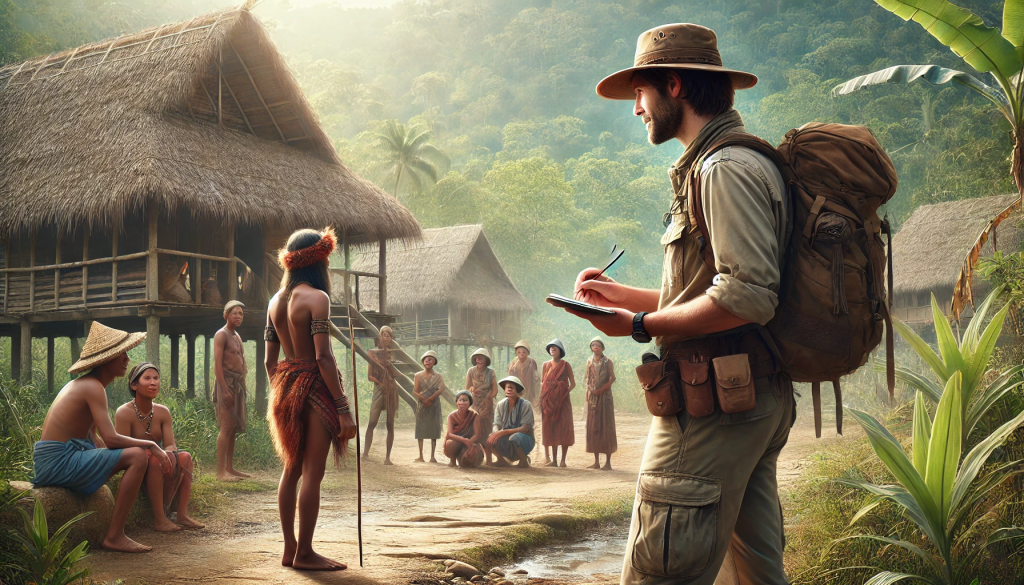
From 1915 to 1918, Bronisław Malinowski conducted long-term fieldwork in the Trobriand Islands, pioneering the method of participant observation. He learned the local language, took part in economic activities such as the Kula exchange, and meticulously documented local customs, kinship systems, and religious rituals. His work not only laid the foundation for modern anthropological fieldwork, but also introduced the theory of cultural functionalism, which emphasized the social functions of cultural phenomena. While his research was groundbreaking, it also sparked ongoing reflections on the ethics of fieldwork and the role and identity of the researcher.
Many early fieldwork projects were tinted with the colors of colonialism. Anthropological research was often funded by colonial governments, and the knowledge produced—about local cultures, social structures, and customs—helped those governments better manage and control their colonies.
Of course, that may not have been the anthropologists’ intention. For them, the value of entering an unfamiliar cultural community and decoding, piece by piece, its worldview—through a method that is simultaneously objective and deeply immersive—lay in expanding the range of possibilities of human existence. Rather than judging which culture is “advanced” or “backward,” or worrying about the size or power of a given society, anthropologists sought to record ways of life that were coherent within their own logic. As long as a belief system existed and made sense within its own context, it was worth documenting as a human worldview. These “other” cultural perspectives often became mirrors through which anthropologists could reflect on their own cultures—highlighting the boundaries and assumptions of their own worlds through what seemed “unreasonable” in others.
Modern Fieldwork: From Immersion to the “Double Life”
With the acceleration of globalization and shifts in modern society, traditional “others”—the remote, isolated communities that once dominated anthropological studies—are becoming increasingly rare. As a result, both the subjects and methods of anthropological research have continued to evolve. Ethnography, the key method and mode of representation in anthropology, has also undergone transformation.
Traditional fieldwork emphasized long-term immersion and comprehensive documentation, and ethnographies were often detailed accounts of a single community. In contrast, modern fieldwork tends to be shorter and more methodologically diverse, making ethnography more flexible and pluralistic. Researchers no longer study only distant, unfamiliar cultures, but also turn their attention to societies similar to—or even their own. This shift has broadened ethnography’s applications to fields such as sociology, education, business studies, and public health.
Modern social science fieldwork—or at least the kind most PhD students conduct—often looks something like this:
Shorter timeframes:
Researchers might spend only a few weeks or months in the field, sometimes making several short visits instead of conducting a continuous, long-term study.
Mixed-method approaches:
To make up for the reduced time, modern ethnographers increasingly rely on combining methods. Ethnography is no longer limited to participant observation—it may now include interviews, surveys, visual documentation, artistic practice, social media analysis, and more.
Greater attention to the researcher’s own identity:
Traditional ethnography often treated the researcher as a neutral, symbolic observer, downplaying how their identity shaped the research process and outcomes. Contemporary ethnography, however, places increasing emphasis on positionality—recognizing how a researcher’s background, perspective, and emotions affect their work.
An outsider perspective can help researchers avoid internalized cultural biases and notice things locals take for granted, allowing for cross-cultural comparisons that highlight both universals and specifics. An insider, on the other hand, may have deeper access to the emotional and value systems of the community. In most cases, researchers embody a hybrid “insider-outsider” identity—an insider in some respects (e.g. ethnicity), an outsider in others (e.g. class).
Although today’s fieldwork is far less “immersive” than in the past, the researcher’s work now unfolds alongside their ordinary life, often without the dramatic sensation of “returning home” after a prolonged absence. That moment of return—like an astronaut landing back on Earth and awkwardly rediscovering gravity—is largely gone.
Fieldwork has become part of a 9-to-5 rhythm, not a lifestyle. This “double life” may reduce the cultural shock and estrangement that early anthropologists experienced, but it introduces new challenges. Researchers must stay attuned to the field while juggling the demands of daily life, and find meaning in the mundane.

Even so, a researcher’s sensitivity and curiosity toward seemingly ordinary things remains constant. Like a traveler arriving in a new place, their senses are fully awake—everything becomes interesting again. In the midst of a busy life, fieldwork becomes an invitation to slow down and observe with care.
When taking fieldnotes, researchers often don’t know which details will ultimately prove useful. The best they can do is record everything as faithfully and thoroughly as possible—because even the most insignificant object or conversation might unexpectedly carry the weight of a larger narrative. These scattered fragments turn data analysis into a process of continuous coding and decoding, peeling back layers of meaning.
You’ll probably regret not asking the most important question. You might have to return to the field to collect more data. But you’ll also remind yourself to make peace with the material you’ve already gathered—after all, deadlines don’t wait.
Conclusion: A Puzzle Game
Fieldwork is not a romantic adventure—though it’s often portrayed that way. One might imagine a scene like this: a lean but rugged man in khaki shorts and a wide-brimmed hat, lounging on the beach of some tropical island with a beer in hand, saying with a knowing look, “You have to go to the field.” This is the classic image of the anthropologist: fieldwork as an exotic quest.
But in reality, fieldwork is made up mostly of tedious tasks: filling out forms, organizing data, rewriting research plans over and over again—facing rejection, doubt, and indifference. Surprises are guaranteed; the only question is how they will happen. And no, you can’t entirely leave your own life behind and fully become “one of them.”
“You’re deeply embedded in their lives, yet always somewhat outside their society.”

A certain image comes to mind: the fieldworker as a collector of stories. Each brief encounter with a participant gives you a small piece of a puzzle. And as these pieces accumulate, they begin to form a story that transcends any single individual. The shape of this larger story is unknowable at first—you can’t predict which pieces will matter. All you can do is try to find a logic within the uncertainty, and from your own perspective, piece together the narrative.
With that thought, I somehow feel a flicker of renewed motivation… even for revising those ethics forms and risk assessments.
 Claire Zhuo Pang
Leave a comment