
Recently, I’ve been wanting to read more books. But after spending the entire day staring at a computer screen for work, my eyes are already exhausted. The chronic dry-eye condition I developed back in school has never really improved. So I turned to audiobooks instead.
I listen at night, right before bed. Most evenings, I don’t make it very far before drifting off. When I wake up, the world has shifted and the story has moved on without me. It reminds me of the elderly at home (and my dad, too) falling asleep on the sofa with the television still on. Or like dozing off during a high school class and waking up with no idea which problem the teacher is now explaining. In this rhythm of half-sleep and rewinding, I eventually finished Thomas Sowell’s Migrations and Cultures.
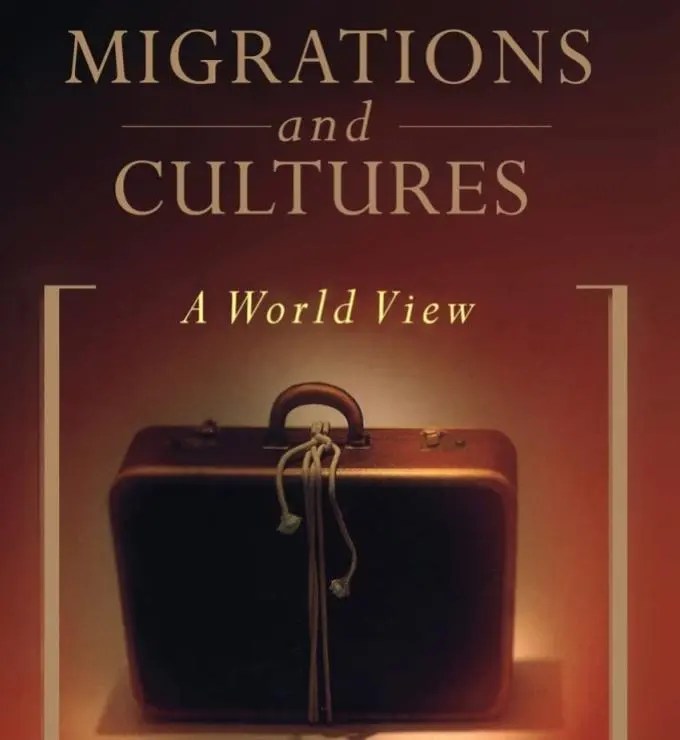
First published in 1996, the book examines six major migrant groups with global trajectories—Germans, Japanese, Italians, Chinese, Jews, and Indians. Across six chapters, Sowell explores the “cultural capital” these groups carried with them, how their skills were revalued in new societies, how this shaped their distinct economic trajectories, and how they, in turn, profoundly influenced the economies, politics, and cultures of their host societies.
The book is immensely rich, drawing on an enormous body of historical material and data. Any short reflection inevitably leaves much out—especially considering the portions I likely missed while dozing off.
I plan to write this in two articles. In this first article, I will introduce the causes and patterns of migration, along with several recurring phenomena. In the second one (in the making), I will connect migration to colonial history and discuss the fate of a particular group often referred to as “middleman minorities.”
The Forces and Directions of Migration
The motivation for migration is often summarized simply as “seeking a better life.” But when we look at specific migrants—international students studying abroad, seasonal agricultural workers, expatriate employees of multinational corporations, refugees fleeing war or disaster—we quickly see that what they are leaving behind varies enormously. Whether “going back” is even a viable option differs from person to person.
For most of history, large-scale migration has been rooted in deep structural problems in the country of origin: poverty, war, environmental disaster, or a lack of economic opportunity. If not for certain forces beyond their control that made survival at home increasingly untenable, many would never have embarked on the risky path of migration.
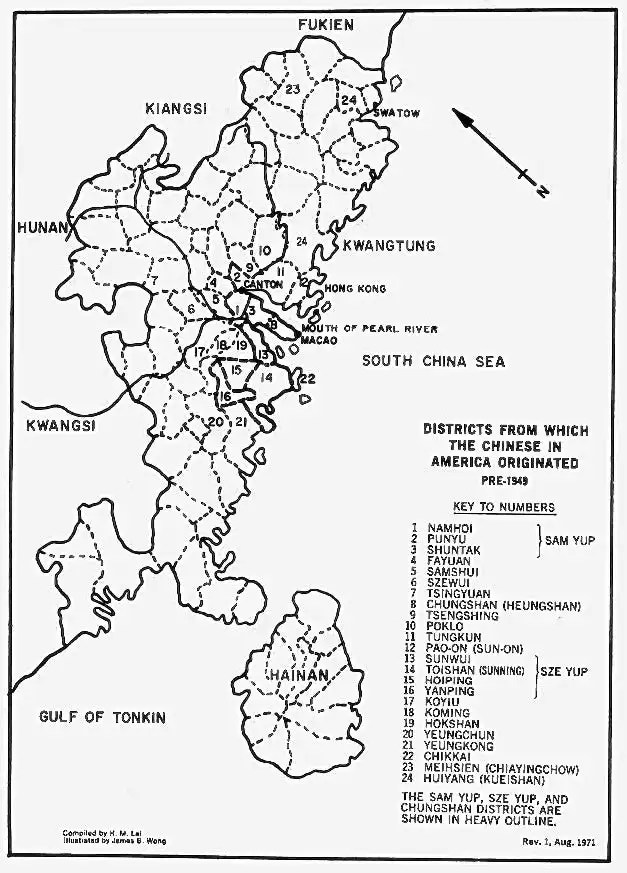
Take, for example, the Chinese who crossed the Pacific Ocean in the nineteenth century. The vast majority came from the Fujian and Guangdong provinces, often described as “eight parts mountain, one part water, one part farmland (八山一水一分田).” With mountainous terrain and limited arable land, agriculture could barely sustain livelihoods. At the same time, the region faced the sea and had a long history of maritime trade. During the late Qing dynasty, conflicts such as the Hakka–Punti wars, the Taiping Rebellion, and warlord struggles further intensified survival pressures, making migration to the Americas and Southeast Asia an increasingly attractive option.
A comparable pattern can be found in southern Italy’s seasonal agricultural migration. Compared with the more industrialized north, southern Italy remained economically underdeveloped for a long time. Land was concentrated in the hands of a few large landowners, and agricultural technology lagged behind. When Argentina and Brazil opened up the vast and fertile Pampas in the late nineteenth and early twentieth centuries and demanded labor, southern Italian farmers traveled to the Southern Hemisphere to work for several months, returning home with their savings. Because their migration followed agricultural cycles, they were often called “migratory birds.”
Sowell notes that migrants are often atypical members of their home societies—and usually not the very poorest. High transportation costs and the profound uncertainty of overseas life meant that migrants were more likely to be those with some savings, capable of paying for passage, and willing to take risks.
Seasonal agricultural migration across land routes—or the seasonal movement of shepherds—has a far longer history than transoceanic migration. In the age of sail, crossing oceans was extraordinarily dangerous. Not only were fares high, but sailing ships depended on wind, making arrival times unpredictable. Travelers often had to gather early in port cities and wait for departure. People from different regions and different disease environments congregated for long periods, creating fertile ground for epidemics. Combined with frequent shipwrecks, mortality rates were staggering. In the mid-nineteenth century, as many as 17 percent of migrants bound for the United States did not survive the voyage.
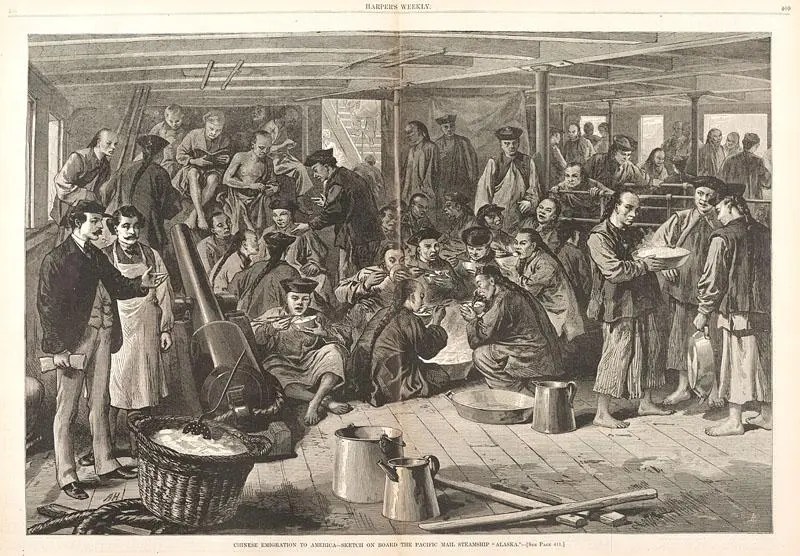
The emergence of steamships in the 1860s made large-scale transatlantic—and increasingly transpacific—migration possible. Compared with long and perilous sailing voyages, steamships dramatically shortened travel time and reduced mortality, making ocean crossings conceivable for many more people. The expansion of railway networks further transported inland populations to port cities, where they could embark on ships. In this sense, the global migration waves we witness today are, to a significant extent, products of technological progress.
Yet the journey was only the beginning. After arrival came an even greater challenge: how to take root.
For seasonal agricultural migrants, permanent settlement was never the goal. They simply leveraged differences in regional productivity to earn higher wages, and cultural integration was largely irrelevant. But for those seeking long-term residence, finding one’s place in a new society—and gaining recognition within it—became a long and arduous task.
Demographically, many first-generation migrant communities were overwhelmingly male. Some were single; others left wives and children behind. For extended periods, the male-to-female ratio within certain migrant groups could reach 10:1 or even 20:1. These “pioneers” had to accumulate enough money for travel and settlement before bringing their families over. Many never succeeded and lived apart from their loved ones for a lifetime.
Some single men married local women, but the likelihood of such cross-cultural marriages depended on ethnicity, economic status, and religious proximity. A striking contrast is that Chinese men who migrated to Southeast Asia in the nineteenth and early twentieth centuries had far higher rates of intermarriage with local women than Chinese men who migrated to the United States.
Over time, as pioneers established themselves and reunited with family members, the proportion of women in migrant communities increased, children were born, and gender imbalances gradually eased. This pattern—where migrants rely on kinship and hometown networks to bring others in a chain-like flow—is known in migration studies as chain migration. It helps transform migrant communities from temporary enclaves into settled societies.

To prevent migrants from becoming permanent settlers, host countries have at times restricted family reunification and manipulated gender ratios to disrupt chain migration. A prominent example is the United States’ Chinese Exclusion Act of 1882 and its precursor, the Page Act of 1875. After the completion of the Central Pacific Railroad, demand for Chinese labor declined, while stable Chinese communities became increasingly visible. The Page Act restricted the entry of Chinese women, attempting to prevent the formation of Chinese families at the source. The Chinese Exclusion Act then fully prohibited Chinese labor immigration—a ban that remained in place until 1943[1}.
The argument that immigrants should provide cheap labor but refrain from influencing the social and cultural fabric of the host country continues to surface in contemporary debates. When some Americans complain that Caribbean immigrants “bring over all their poor relatives,” one wonders whether they remember that Italian, Irish, and Jewish immigrants—now considered part of the American mainstream—also expanded through precisely such chain migration.
Immigrant Settlement and Occupational Concentration
Once migrants establish themselves in a new land through chain migration, two distinct socio-geographic patterns often emerge: spatial clustering and occupational concentration.
Spatial Clustering: The Ethnic Enclave
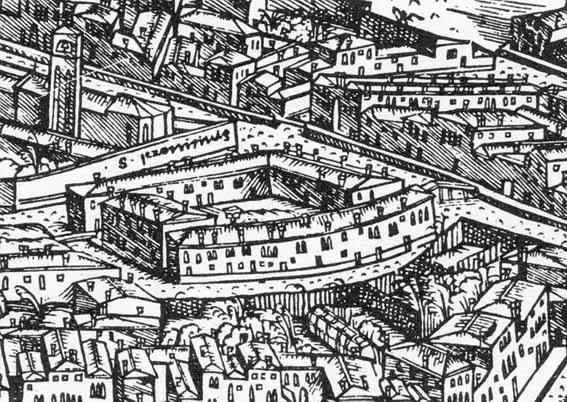
When discussing spatial clustering, we inevitably encounter the concept of the ethnic enclave. The word “enclave” derives from the French enclaver, meaning “to enclose.” One of its earliest and most direct historical manifestations was the forced Jewish quarter in early sixteenth-century Venice, known as the ghetto. Similar arrangements later appeared in many European cities. These Jewish districts were often physically walled and gated, separating Jewish communities from Christian populations. While Jews and Christians intersected economically, they remained distinct in political, legal, and religious life.
However, clustering has often been the result of migrants’ own choices. Some communities cluster deliberately to preserve faith and lifestyle. For example, Orthodox Jewish communities require walkable access to kosher food networks, synagogues, schools, and observance of the Sabbath[2]. Their spatial concentration is not merely defensive—it is infrastructural and cultural.
At times, host countries have even encouraged clustering by granting limited autonomy to attract specific migrant groups. In the eighteenth century, Empress Catherine the Great of Russia invited German farmers to settle and develop agricultural lands, promising them the right to maintain their language, schools, legal systems, and religious practices—though many of these promises were later rescinded.
Clustering can be understood as a strategy for navigating unfamiliar environments. The uncertainty of overseas migration makes traditional ties—kinship, clan networks, shared hometown origins—especially valuable. Enclaves often function as transitional communities, offering affordable housing, entry-level jobs, informal credit systems, and sometimes collective protection against anti-immigrant hostility.
Interestingly, clustering is often highly localized rather than nationally representative. It is not simply that “all migrants from one country live together.” Instead, specific sending regions correspond closely with particular receiving neighborhoods. Migrants from a single village may recreate that village abroad. Through returning migrants or letters home, highly localized knowledge about jobs and living conditions circulates back to a particular hometown. Nearby villages, lacking that information, may send few migrants at all.
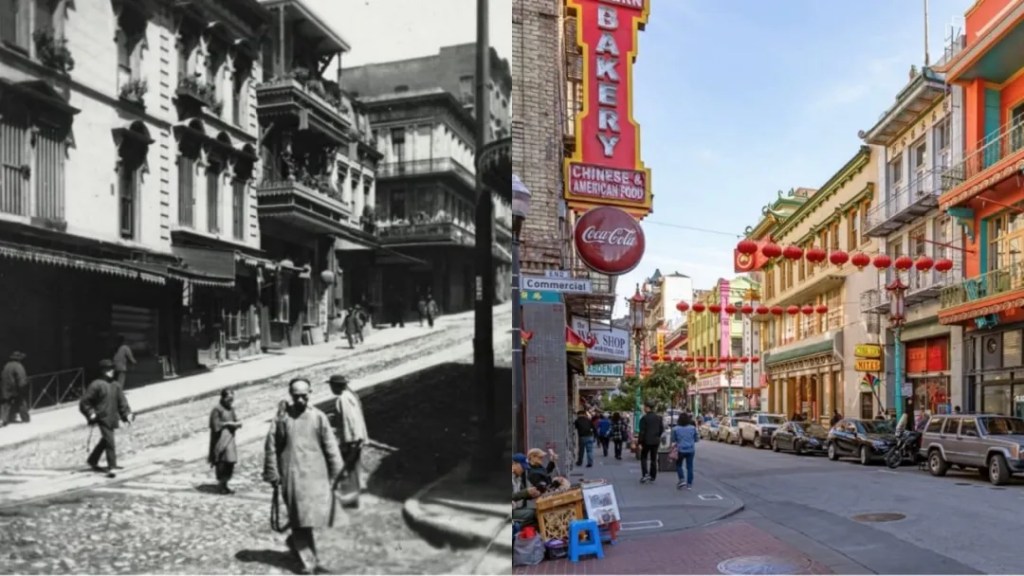
Even today, we see historic ethnic enclaves—Koreatowns, Chinatowns, Little Italys—in many global cities. Located in central urban areas with convenient transport and dense service networks, many of these neighborhoods now face rising land prices and gentrification pressures. Their role as transitional communities has weakened; they increasingly function as cultural landmarks serving broader populations beyond their original ethnic groups.
Occupational Concentration
Parallel to spatial clustering is another pattern: the concentration of certain immigrant groups in specific industries.
Why do people from certain regions develop particular livelihood skills? Geography, climate, religion, politics, and culture all play a role. There is a Chinese saying: “Live by the mountain, eat from the mountain; live by the sea, eat from the sea(靠山吃山,靠海吃海).” In fertile, warm regions, agricultural expertise flourishes. In mountainous areas with limited farmland, people may turn to herding, mining, or seasonal labor. Those living at crossroads between cultural spheres often develop strong commercial traditions. These patterns cannot be reduced to ethnicity alone—they reflect similar ecological conditions across the world.
Although most historical migration flows have moved from poorer to wealthier countries, a more precise description would be that migrants move from regions where the marginal productivity of their labor is low to places where it is higher. The same labor yields a greater economic return. When choosing destinations—or when governments recruit migrants—both sides consider existing skills and how scarce or valuable those skills are in the receiving society.
Take German farmers as an example. While Germany is widely associated today with industrial precision, optics, brewing, and engineering, prior to industrialization in the nineteenth century, it was largely an agrarian and artisanal society. This agricultural expertise was precisely why Catherine the Great invited German farmers to settle along the Volga River. Despite harsh conditions, they introduced new crops and agricultural techniques. Similarly, in the nineteenth century, Brazil recruited farmers from southwestern Germany to develop its southern states. German agricultural practices profoundly reshaped the regional landscape.
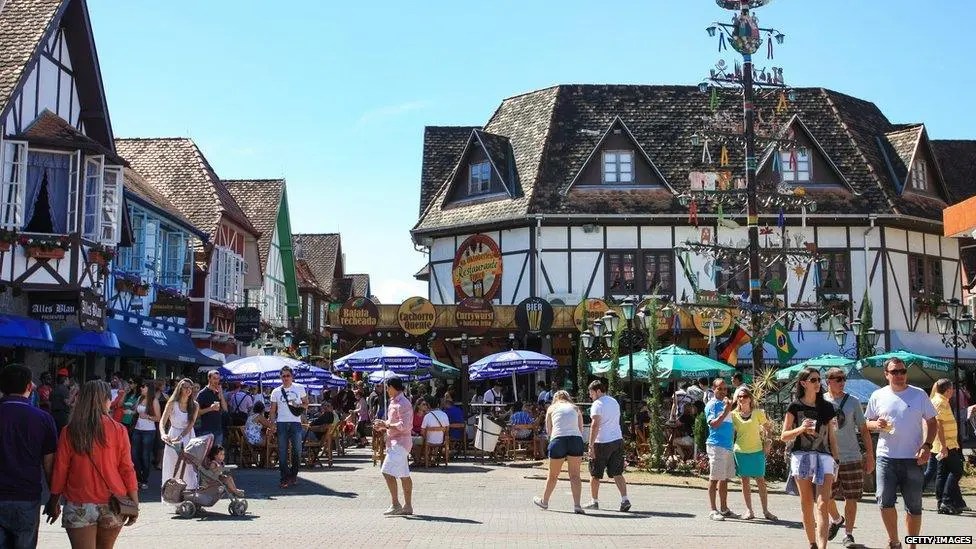
There are many similar examples. Southern Italian migrants brought with them centuries-old stone masonry skills, becoming architects and builders in the Western Hemisphere. Migrants from the mountainous regions of Lebanon, experienced in navigating multi-ethnic and multi-religious trade environments, established extensive retail and wholesale networks in West Africa, the Caribbean, and beyond.
Like spatial clustering, occupational concentration results from both voluntary and imposed factors. Sometimes migrants are restricted by local laws or religious constraints from entering certain sectors—especially those perceived as directly competing with local workers. In the United States during the early twentieth century, many Chinese migrants operated laundries and restaurants. In medieval Western Europe, Jews were often restricted to commerce and moneylending. I will discuss this phenomenon further in the next essay.
At a deeper level, both settlement clustering and occupational concentration reflect a common logic: migrants cautiously replicate the most reliable elements of life from their homeland in spatial and social organization, while economically extending proven survival strategies.
These patterns are often most visible among first-generation migrants. As generations pass and assimilation deepens, second- and third-generation immigrants increasingly integrate linguistically, educationally, and socially into the mainstream. Their spatial clustering and occupational concentration tend to diminish, expanding their range of choices—and eventually allowing them to put down deeper roots.
Conclusion
The Chinese New Year Gala will soon be broadcast again. I know I will still wait for that familiar moment—when the host says, “Wishing Chinese people around the world a Happy New Year.”
When we talk about migration, we often default to grand narratives: the Jewish Exodus, China’s historical waves of “venturing beyond the pass(闯关东)” or “heading west(走西口).” Statistics and demographic trends form the skeleton of history. But beneath that skeleton flow the concrete and intimate life choices of individual migrants.

In almost every public library in the United States, you can access free genealogy services to trace family origins and local histories. In a way, this echoes the Chinese tradition of compiling and revising clan genealogies.
You and I—reading and writing this now—and our ancestors before us, each made decisions that would become the opening lines of our descendants’ family stories. Millions of such moments—each a single turn of thought, a choice made or a risk taken—have converged into the global history of migration, reshaping the world we inhabit today.
Notes
[1] Although the United States formally repealed the Chinese Exclusion Act in 1943 and annulled earlier unequal treaties signed with China, the move was largely symbolic rather than substantively open. The annual immigration quota for Chinese nationals was set at only around 100 persons per year. The timing of this repeal was closely tied to World War II, during which the United States and China were allied powers.
[2] Shabbat: From before sunset on Friday to the appearance of stars on Saturday evening, observant Orthodox Jews refrain from all forms of work. This includes driving, using public transportation, operating elevators, and switching electrical devices on or off. As a result, during Shabbat, essential services and communal institutions must be within walking distance.
 Claire Zhuo Pang
Leave a comment