
Raising awareness through playing card games
- Time: 2017
- Entrepreneurial Solutions to Intractable Problems (Harvard Business School)
We address the over-burdening issue of Anganwadi (rural child care centre in India) workers by designing a card game intervention that not only helps support children’s early development but also raises awareness in the local community regarding Anganwadi teachers’ burden. The cards are meant to change the mindsets of local parents, influence their behaviors, or encourage them to volunteer at Anganwadis to increase the supply of human resources and thereafter ease the multitasking that teachers are struggling with while offering an engaging game that children can play with during the week.
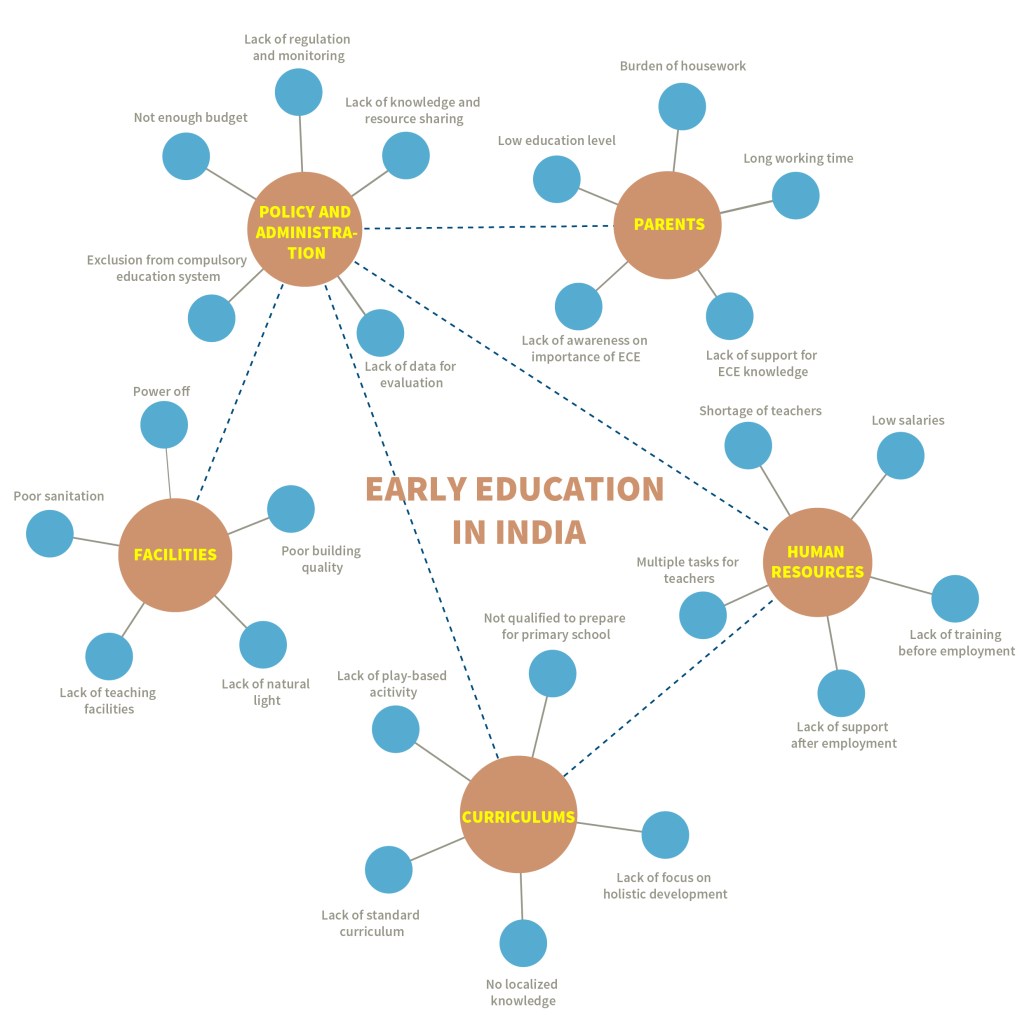
Anganwadis in India encounter a variety of challenges around at least five dimensions. The centers face difficulties from policymakers as well as the physical facilities themselves. Government funding for the centers is relatively low, and there is a lack of stringent regulation or monitoring, so the facilities have minimal infrastructure and even occasional power outages. Furthermore, the curriculum is non-standard across different regions and overall lacks emphasis on holistic development and play-based activity, focusing instead on purely academic lessons even though research has shown that young children require significant social education as well in order to develop properly. Additionally, there are issues with both parent involvement and human resource availability for the Anganwadi centers. Parents often lack awareness of the importance of ECE and are thus not entirely supportive of increased efforts for improved education. On the teachers’ side, there is a shortage of financial support financially, in terms of salaries and man hours, which creates a severe issue of overburden on the teachers. Training for teachers is only six months long, which is entirely insufficient for the amount of assistance they would need to carry out all their jobs simultaneously.
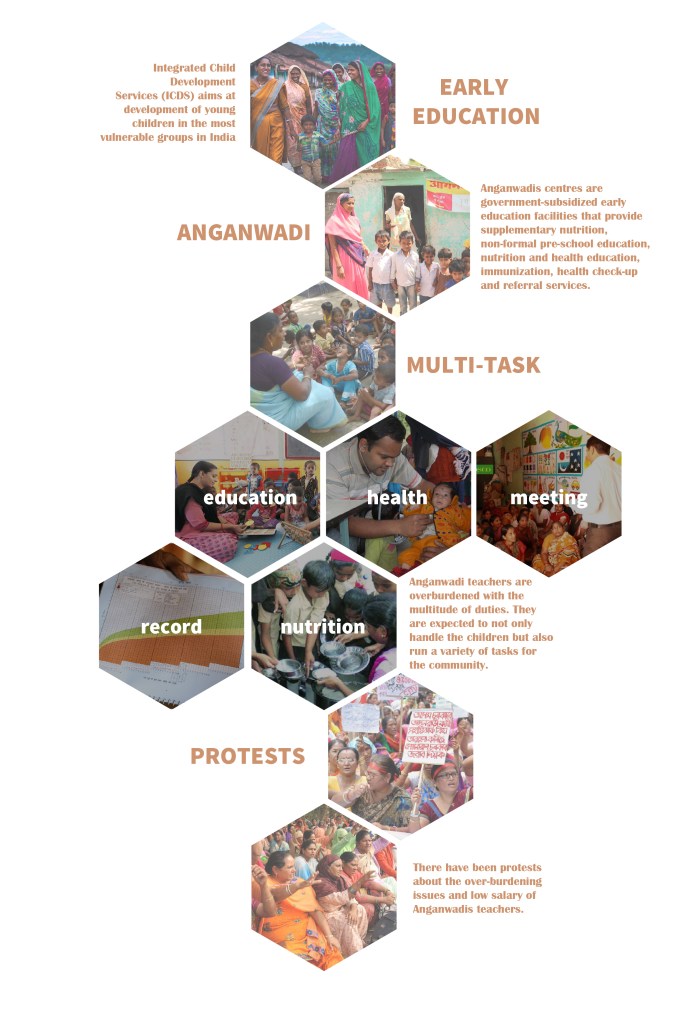
We find that multitasking and the resulting overburden was noted as one of the most severe problems they encountered. This issue is closely associated with a variety of other problems in the early childhood education system at large. The numerous tasks they are required to accomplish result in a general feeling that they are not being paid enough for the work they do. Due to the excessive number of tasks that teachers are expected to accomplish, very little time is actually dedicated to properly teaching the children in the center.
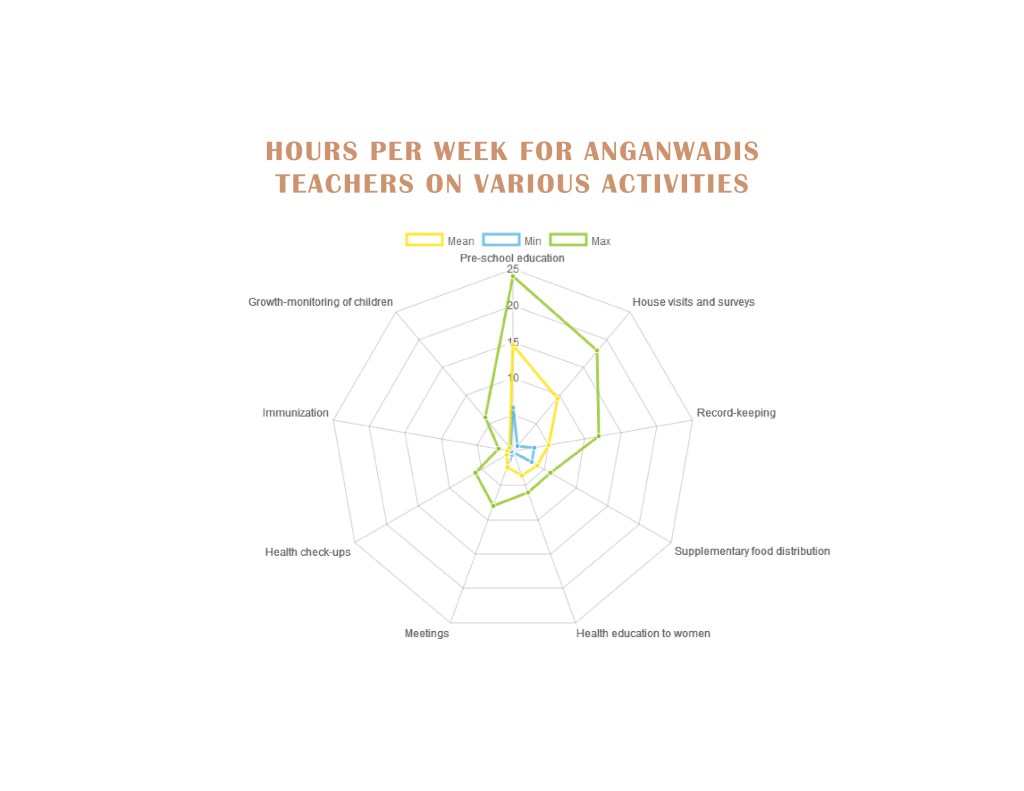
On average, only 14.6 hours per week were dedicated to education, which is less than 2.5 hours per day. On the other end of the spectrum, the minimum hours spent on education was 6 hours per week. While activities like nutrition and immunization are essential to the physical development of the children, without sufficient support for non-teaching tasks, better time management, or increased community support, the teaching component will not be adequate and thus undermine the quality of early education in Anganwadi Center. The difference between the range of activities reveals that there are some teachers performing better than others. Consequently, there is room for intervention.
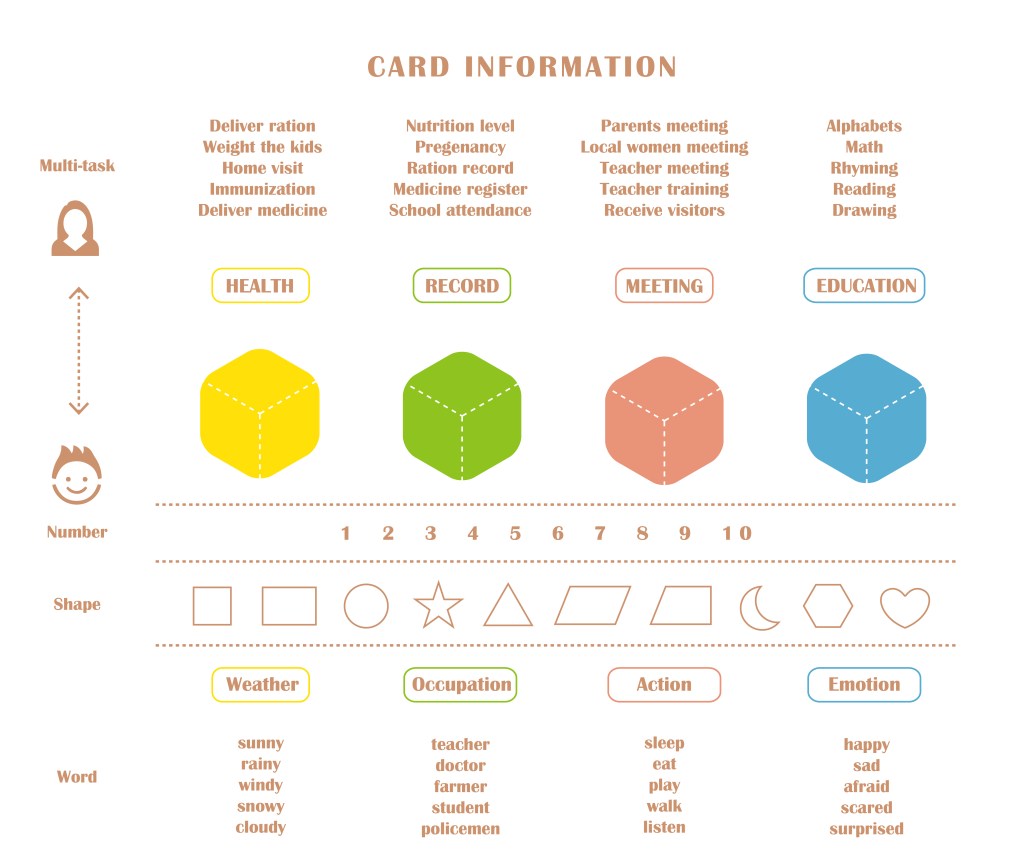
The Teacher/Parent Side:
The four major types of tasks performed by Anganwadi teachers are represented by four colors. Each type has five sub-categories tasks. The card will have the hour per week spent on that specific task with a message to the parents suggesting ways to help.
The Kid Side:
This is the more colorful side to attract kids’ attention. It has numbers, shapes or simple words that can be used in various methods to educate children.
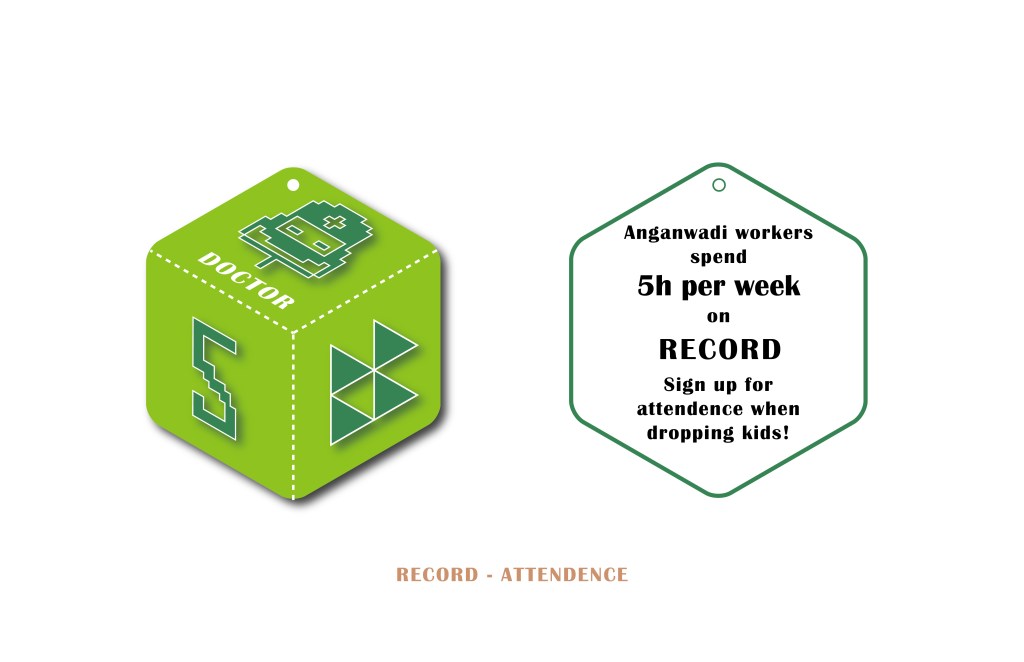
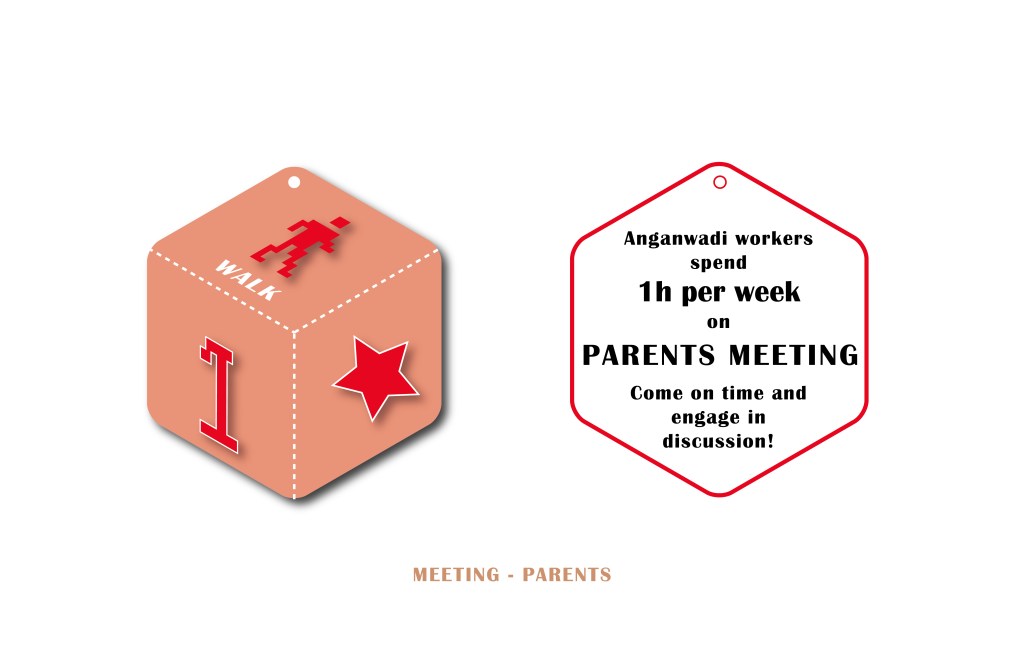
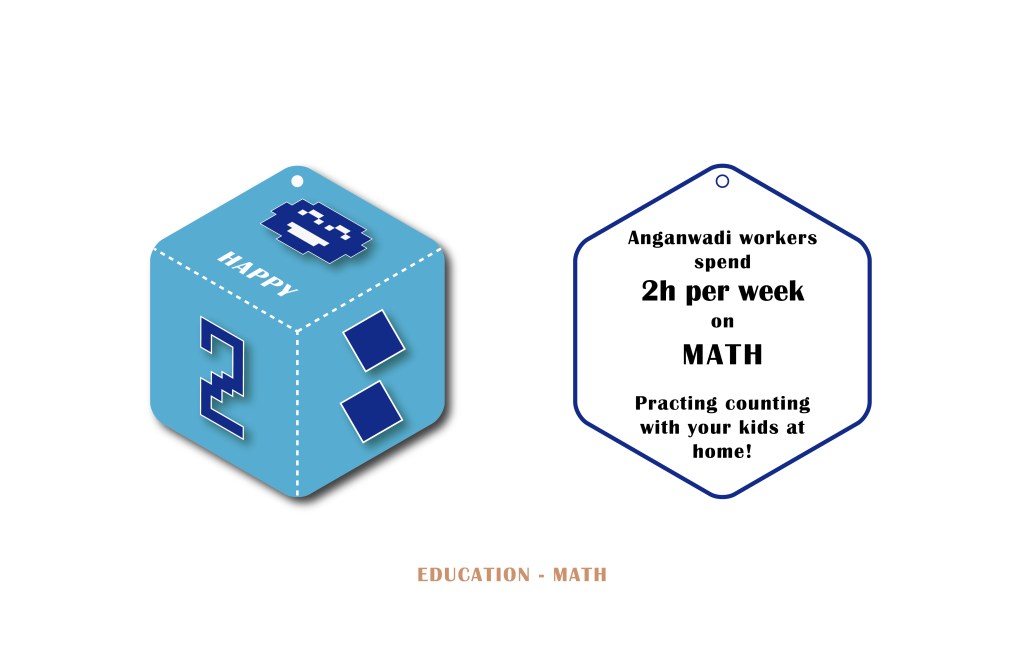
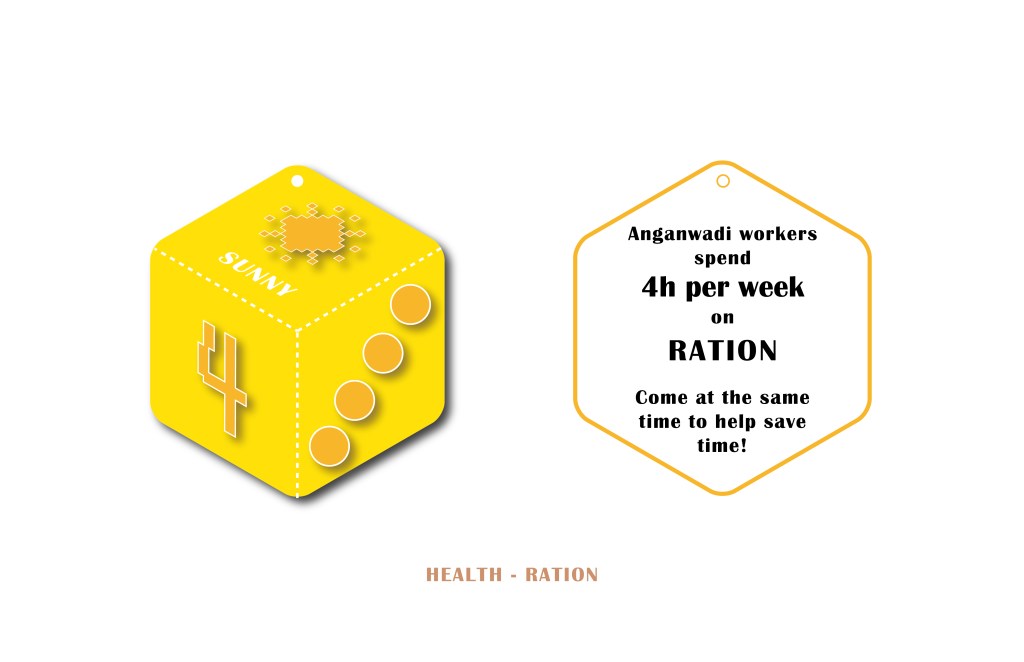

Once finishing its mission of parent engagement, in the future cards can be further cut into 3 pieces to be used just for kids.
A small hole is designed for easy storage – whether that’s stacking on a stick or hanging on a peg.





Interested in knowing more? Please see the full booklet below:
 Claire Zhuo Pang