
Reimagine your neighborhood mall
- Time: 2021
- In collaboration with Sae Kim
- CBT Architects
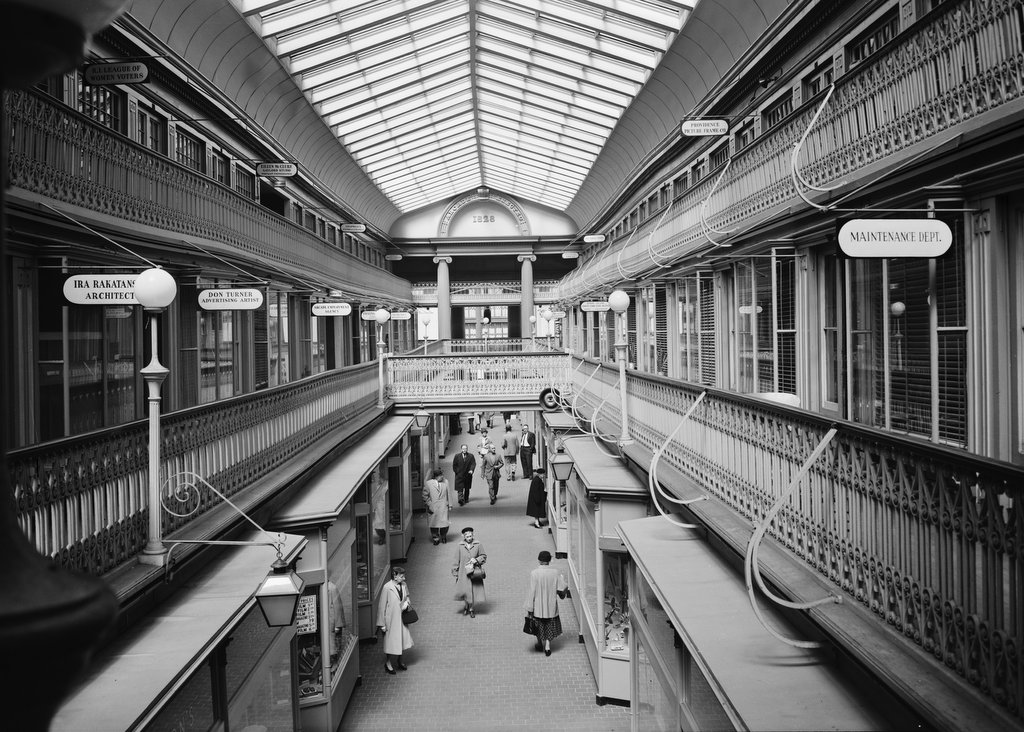

Right: Typical Mall – 2021
While other aspects of our lives have evolved tremendously, the basic layout of malls remains the same over 200 years.

“The mall was originally conceived of as a community center where people would converge for shopping, cultural activity, and social interaction.”
—Shopping Mall Pioneer: Victor Gruen
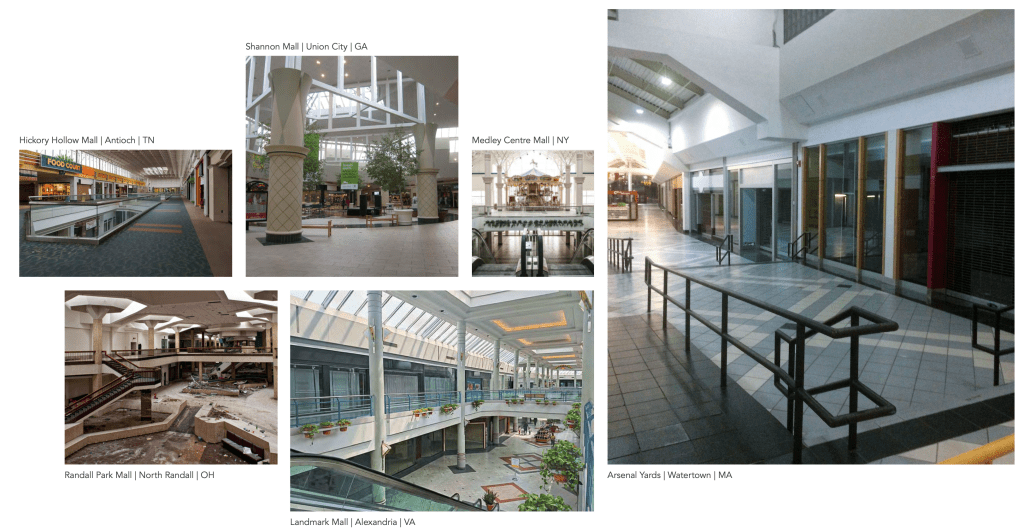
However, it was predicted in 2017 that 1 in 4 American malls would close within the next 5 years. With the transformative impact of e-commerce, the shrinkage of the middle class and the desire to get multiple experiences while shopping.
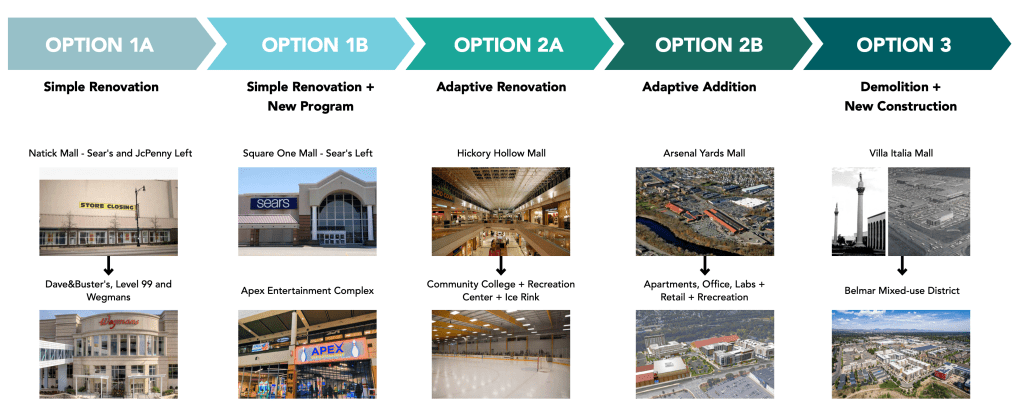
Are we going to keep replacing one anchor tenant with the other to save the malls?
Or shall we reimagine the landscape more holistically?
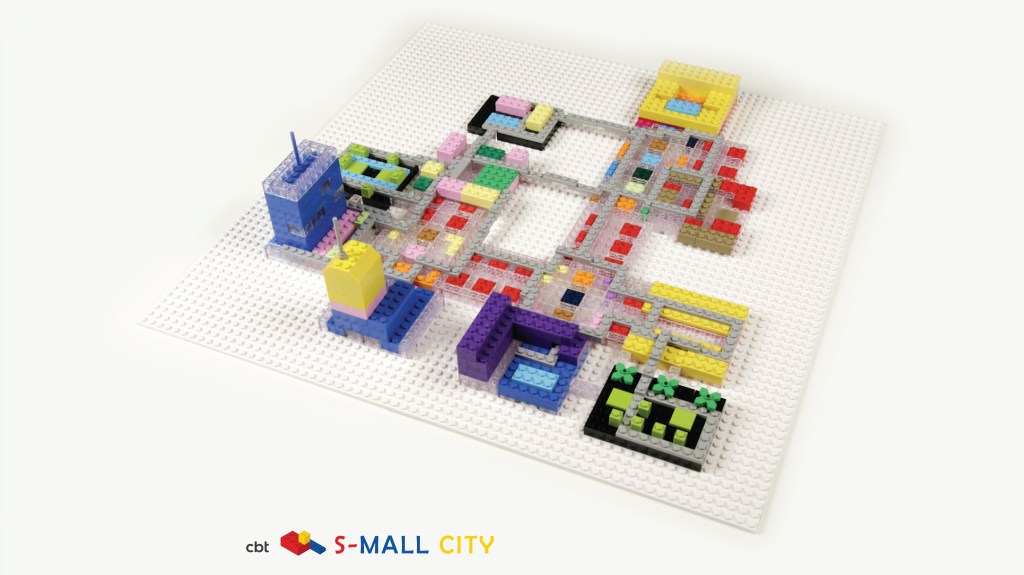
For representation, we choose Lego for its colorfulness, modularity and simplicity.
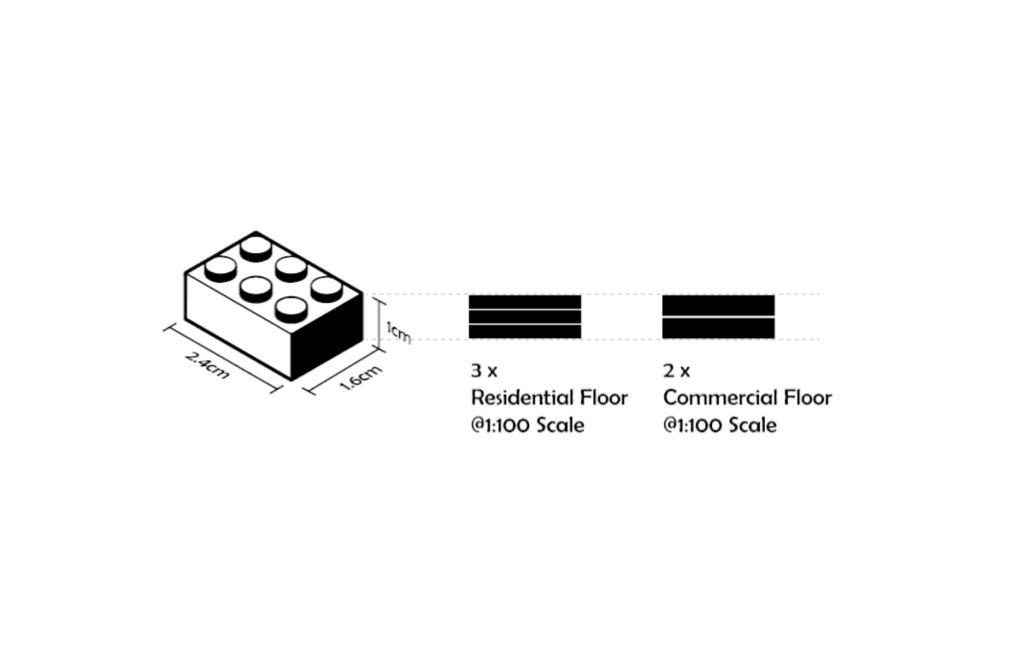
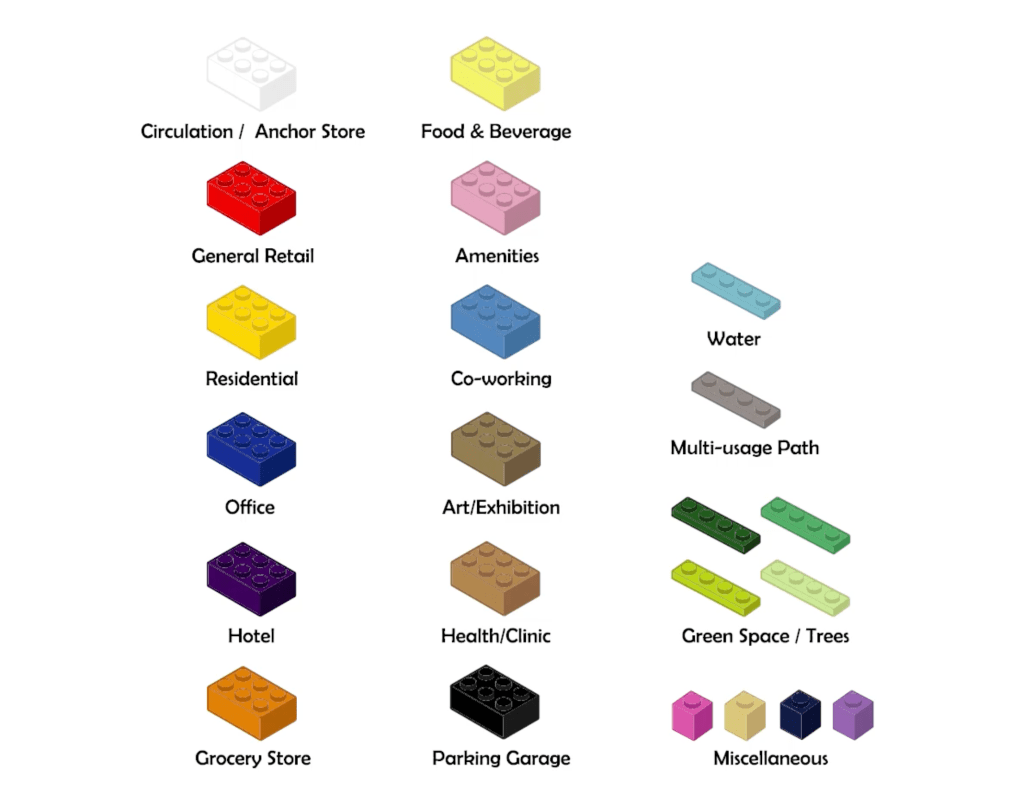
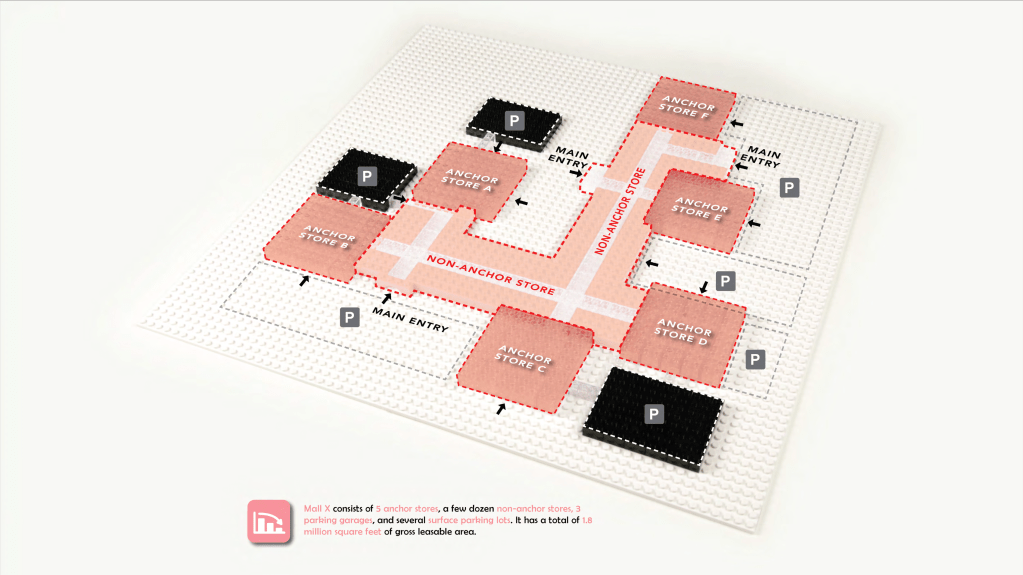
It all starts with a very typical mall layout, like the one you would find in your neighborhood. It consists of a few anchor stores connected by non-anchor stores along both sides of the corridor. The whole building is surrounded by spatious parking lots/garages and is readily accessible from highways.
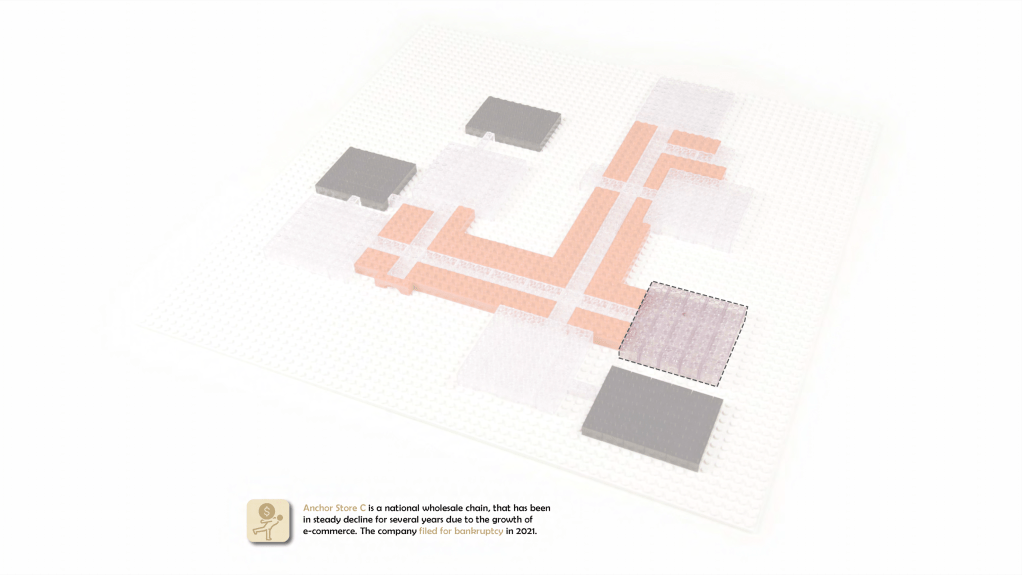
The downturn often starts with the closure of the big anchor stores, which are often department stores that can not make ends meet even before the pandemic. Since the non-anchor stores rely heavily on the foot traffic brought by the anchor stores, the closure of the latter triggers a vicious cycle.
But what if we take the closure of the anchor stores as an opportunity to introduce other programs to the current single-usage mall? The big footprint of these buildings is flexible. They can be transformed into affordable housing, offices, recreational centers, galleries and much more.
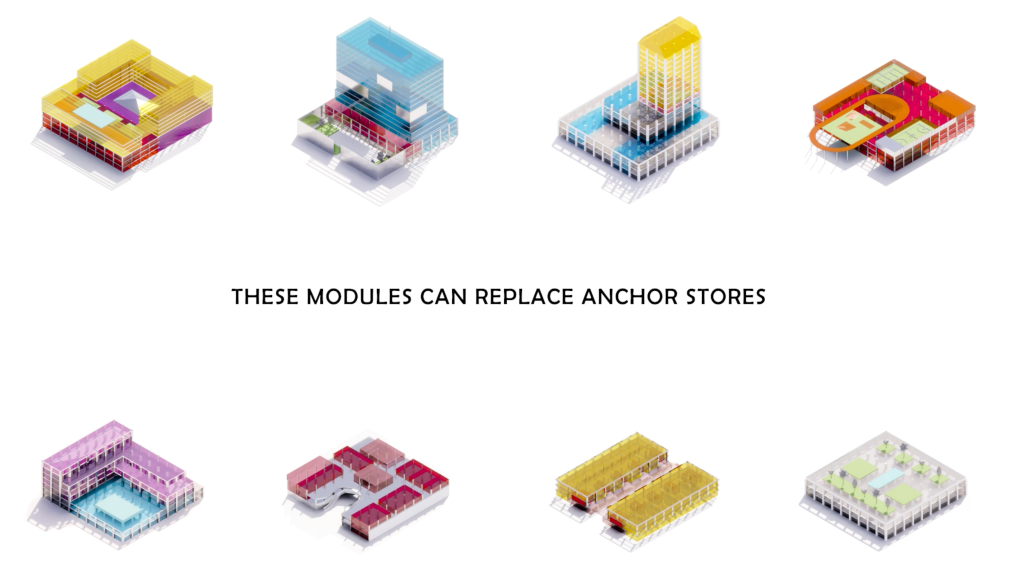
We construct a hypothetical mall that is constantly negotiating with external forces and evolving organically to house different programs and users. Rather than simply a collection of retailers, the future of malls can be a hybrid mini city, which has not only customers but residents, not only parking lots but pedestrian and bike infrastructure, not only a blank wall but an operable, transparent façade that allows for indoor-outdoor interaction.
 Claire Zhuo Pang