
Skyscrapers that give back to the public life
- Time: 2017
- GSD Architecture Studio
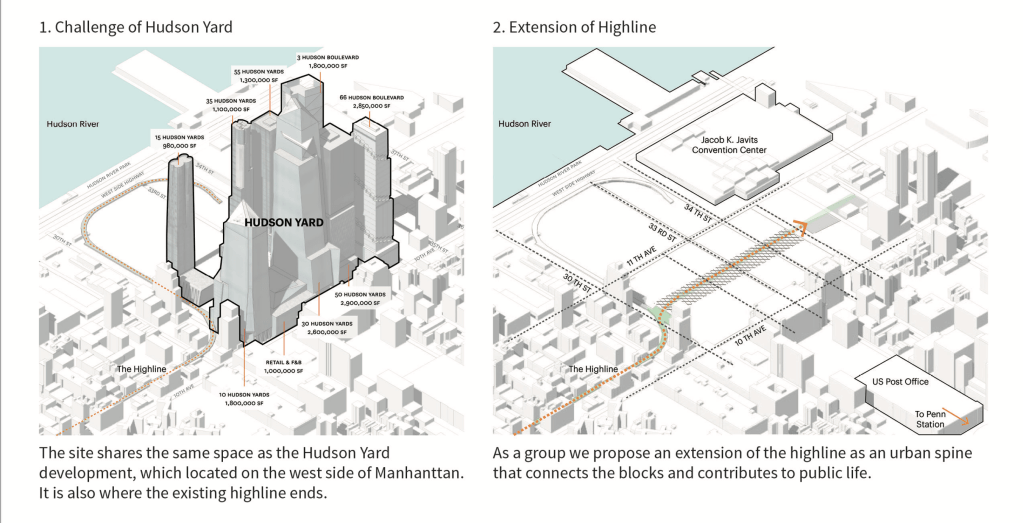
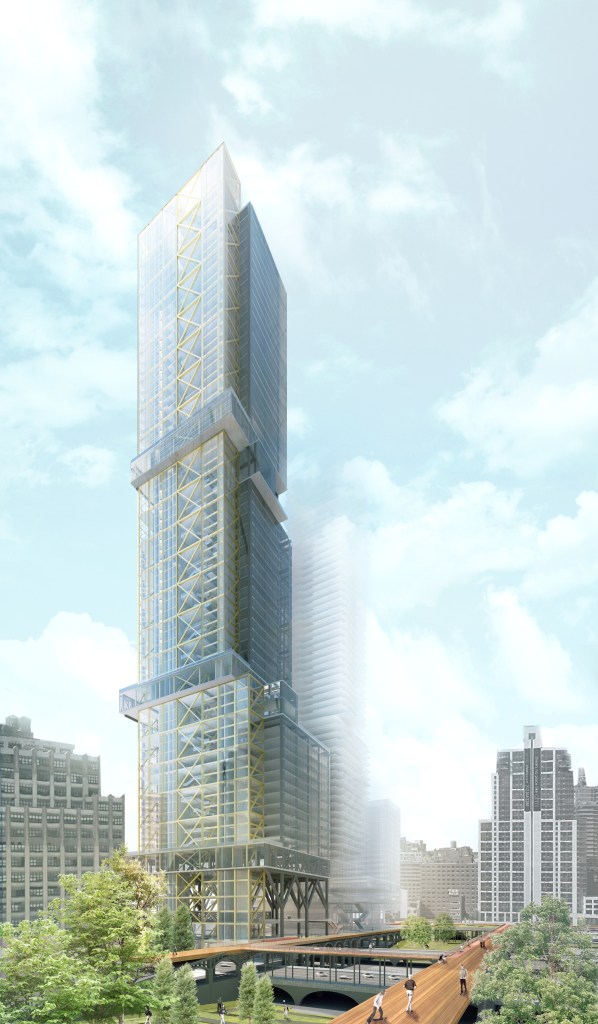
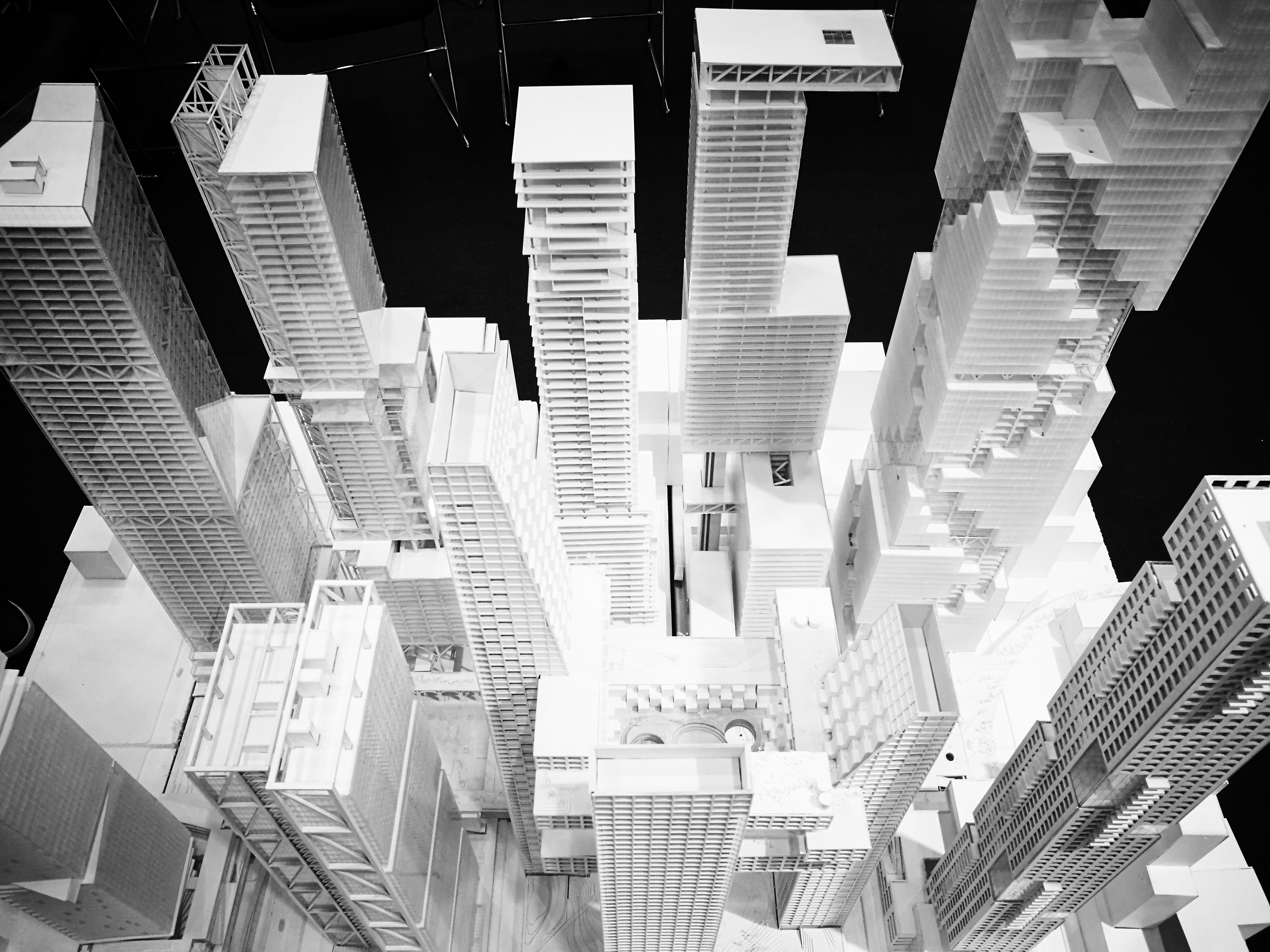
This is a collective effort to answer one question: whether a newly conceived spine can be a generator for a city primarily consisting of high-rise towers. The central spine, which divides the site into 10 blocks, is an extension of the existing High Line.
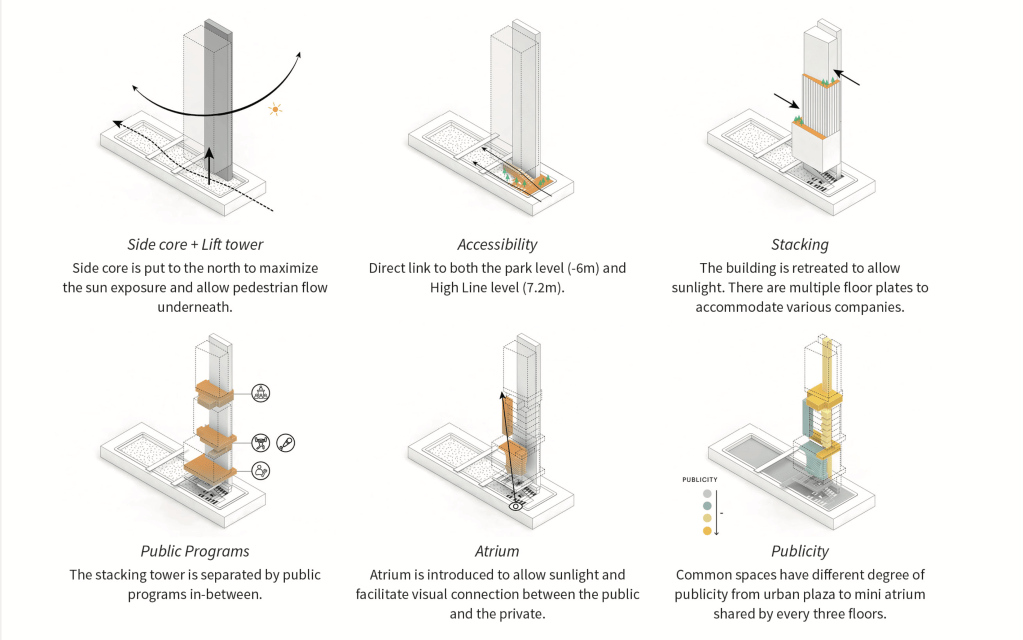
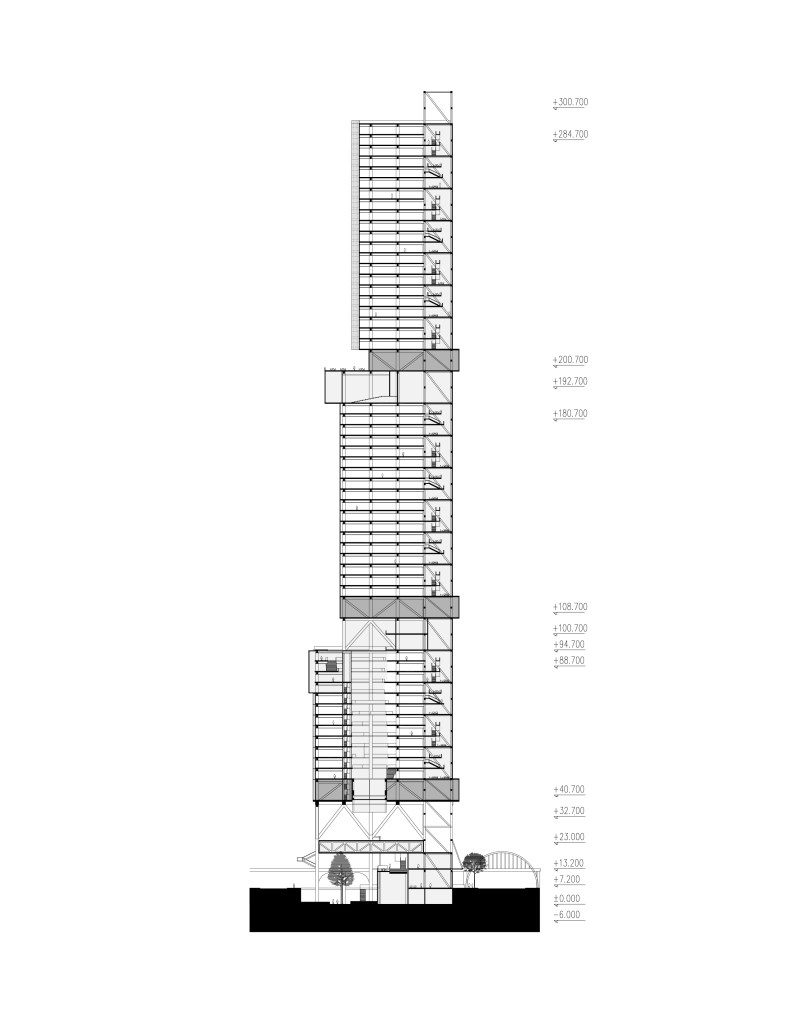
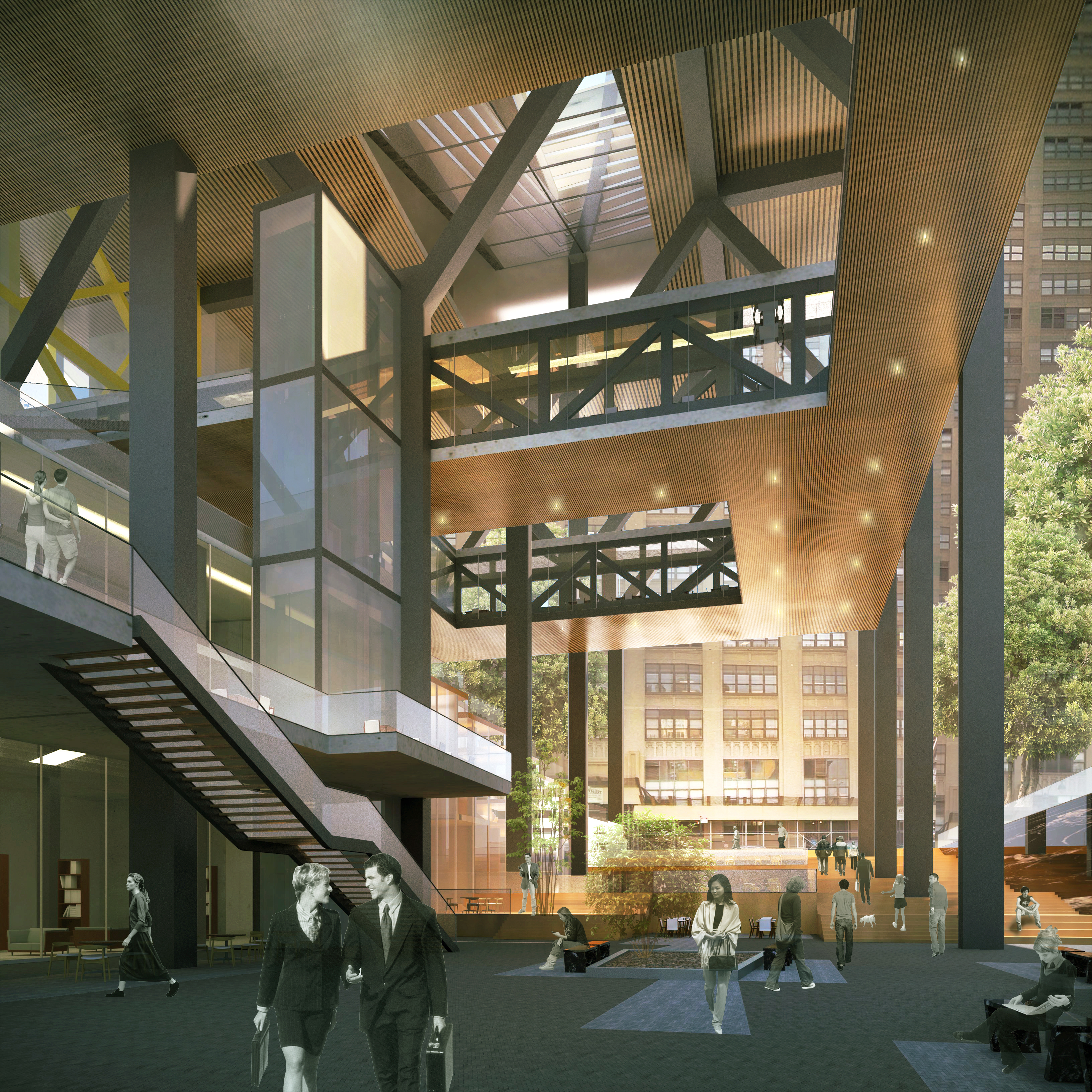
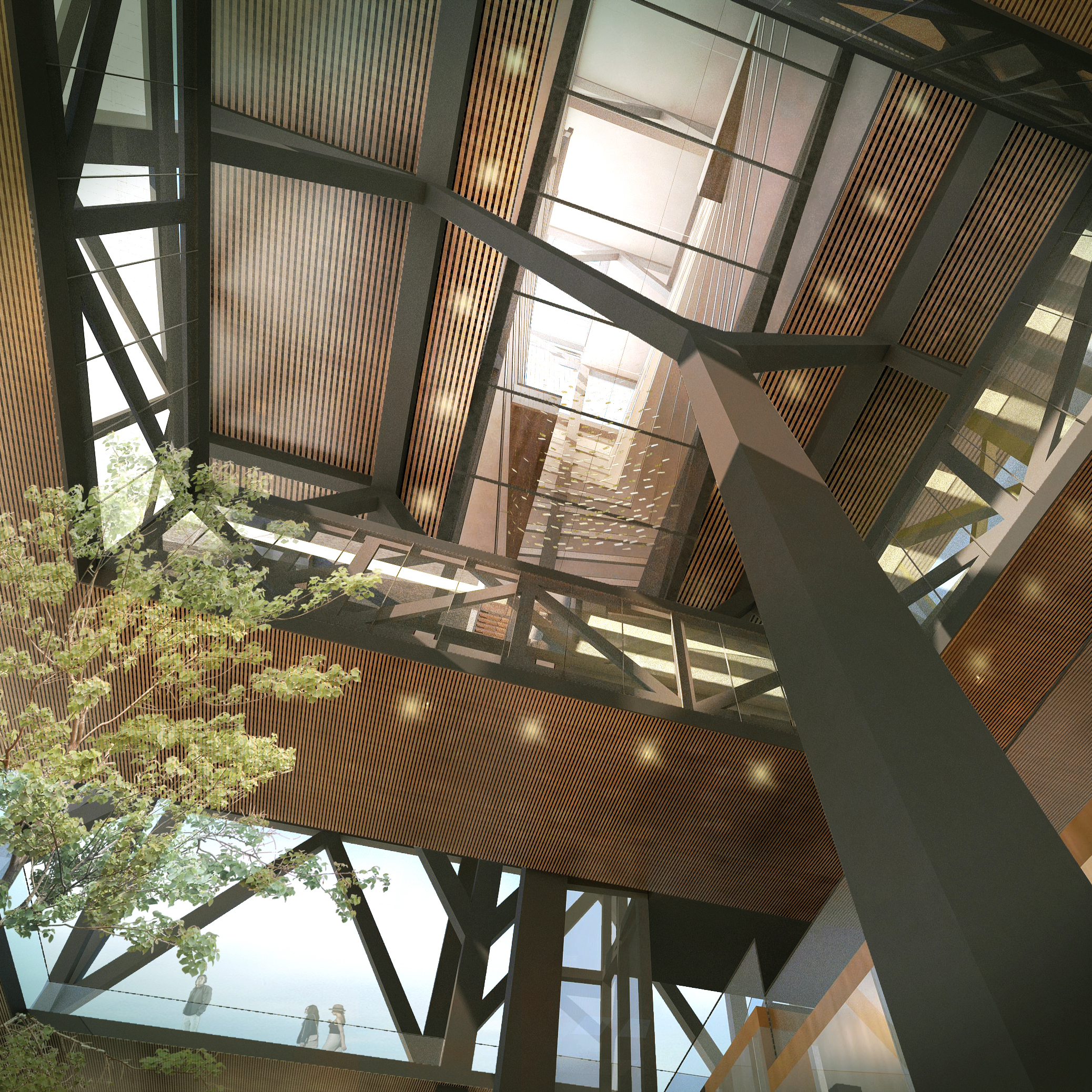
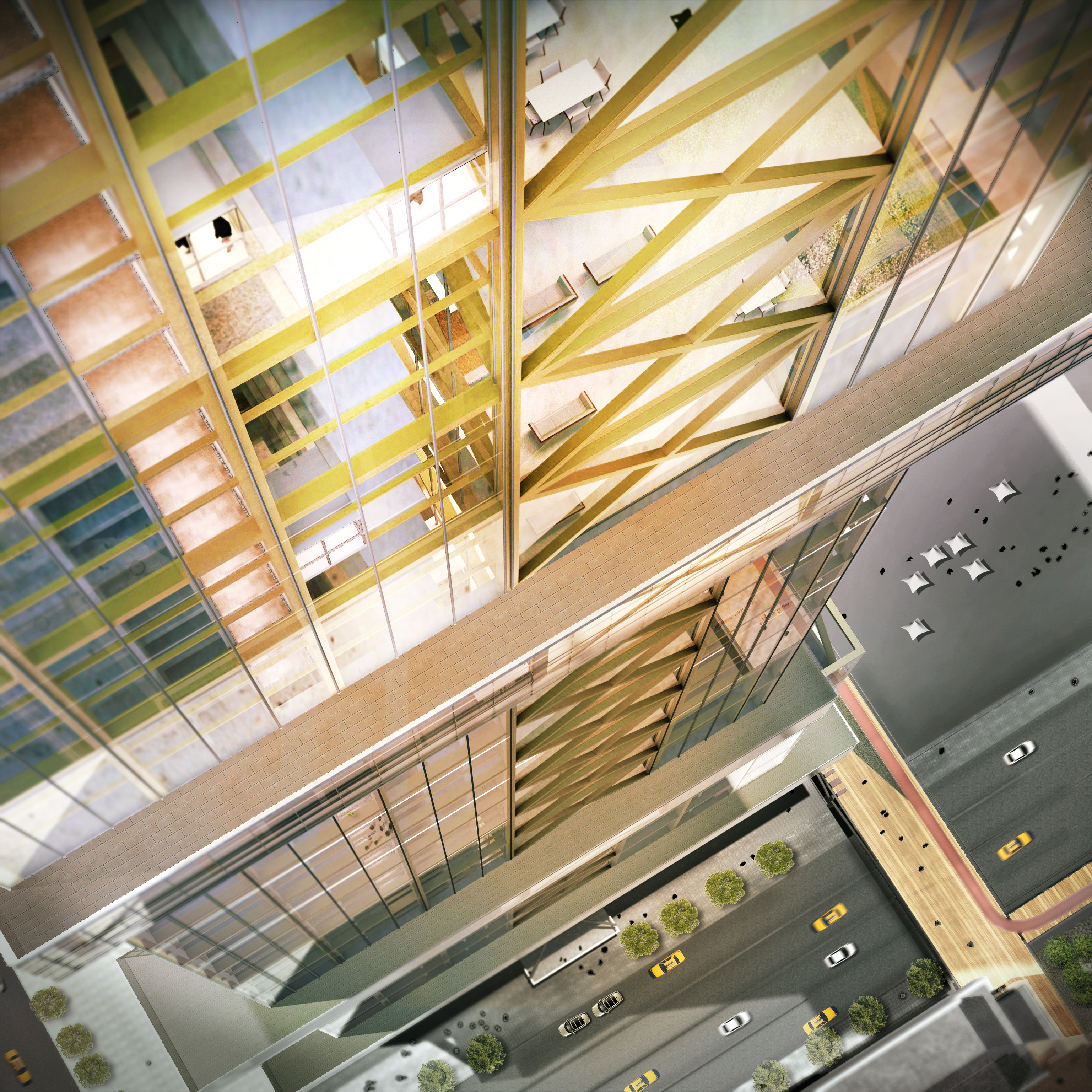
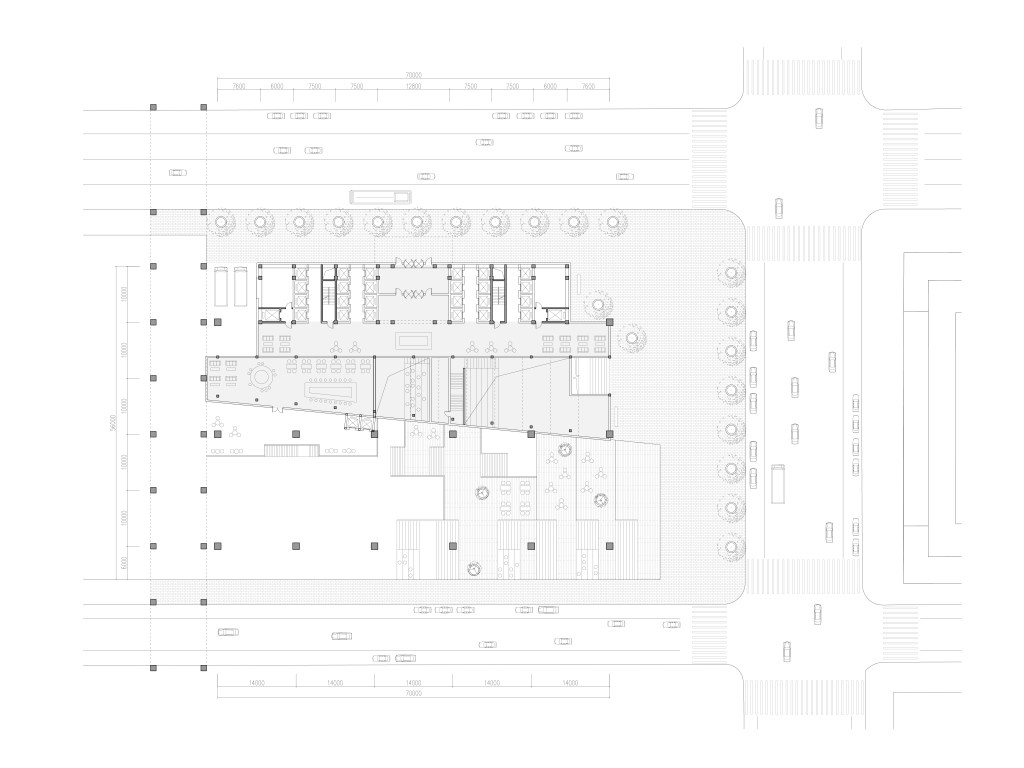
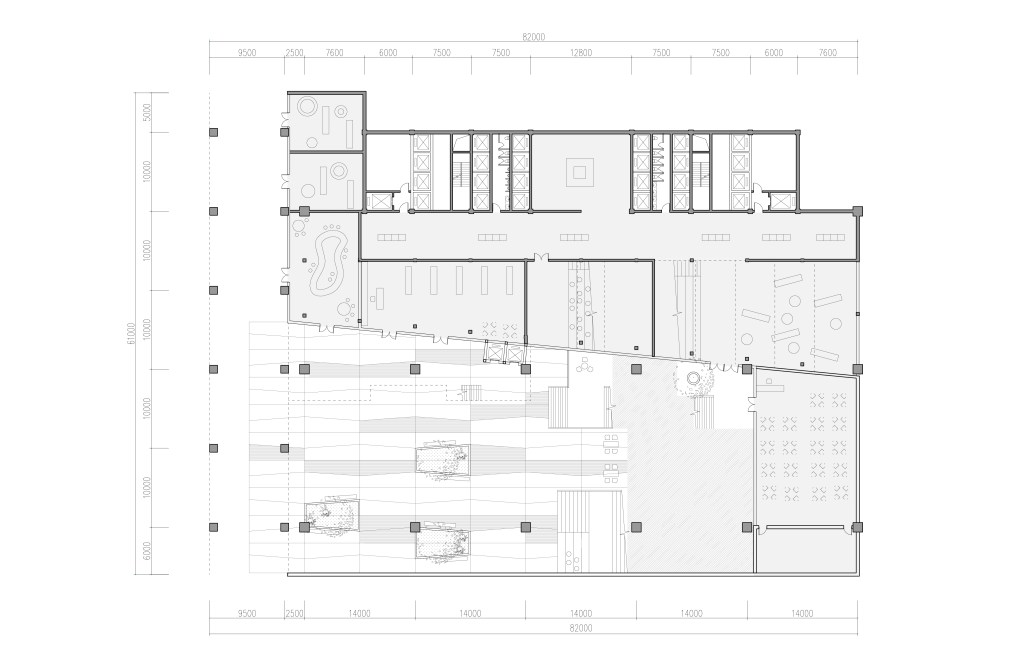
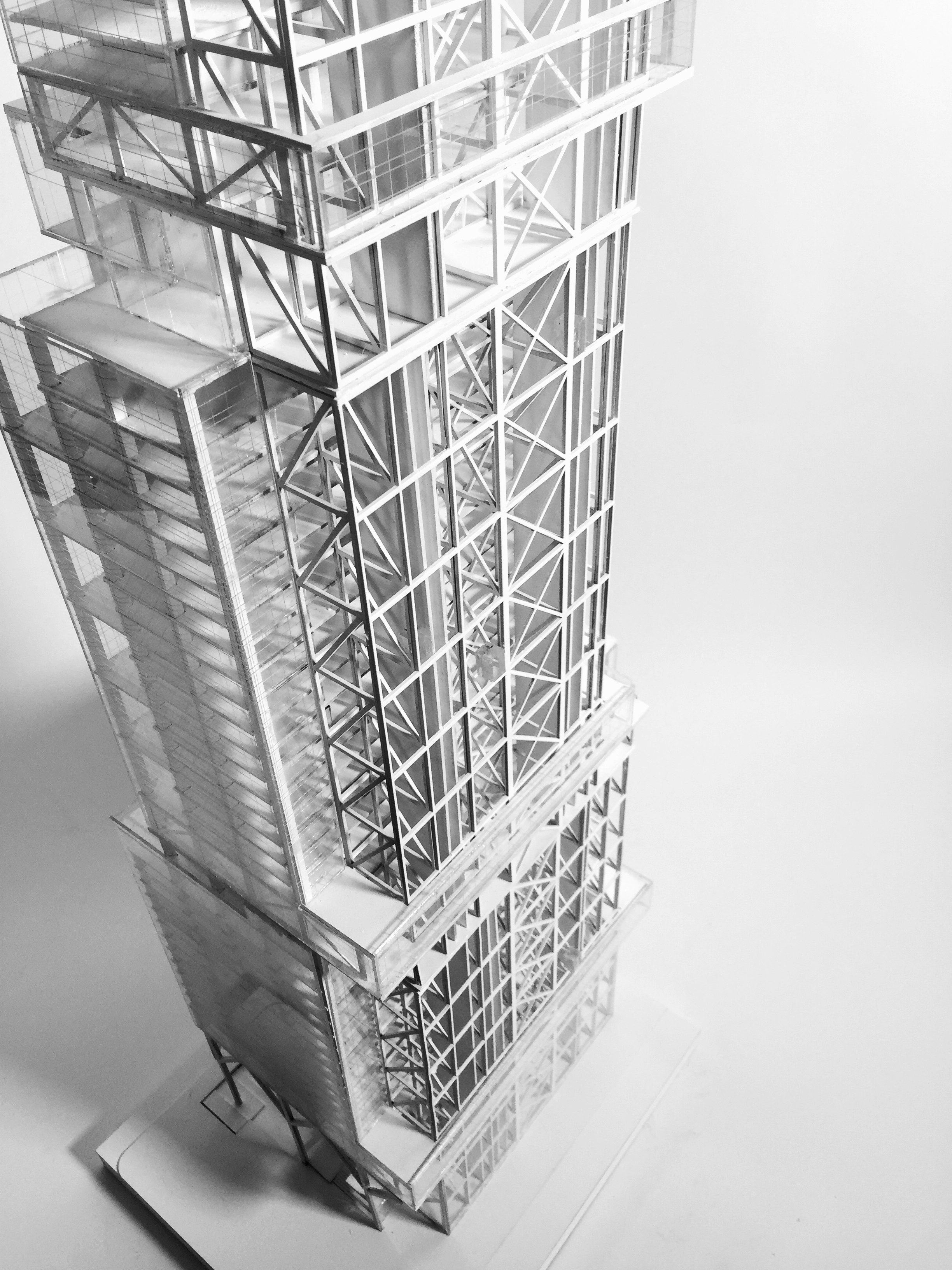
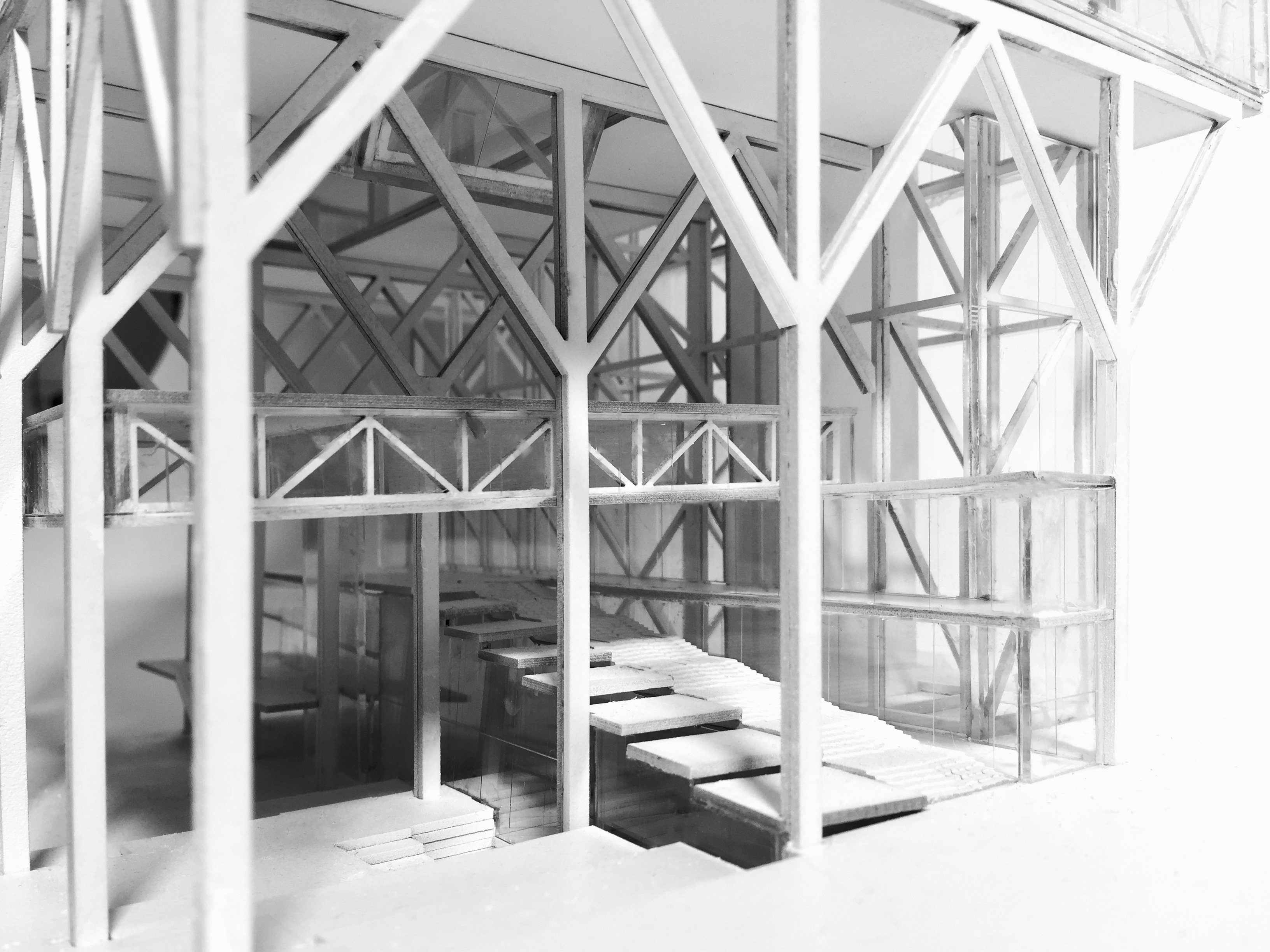
Individually, we design a skyscraper connected by the central spine that satisfies the private developer and contributes to the city’s public life. As an office tower, it is lifted above the ground to encourage free 24-hour pedestrian flow. The lower volume of the tower is revealed to the public through an atrium. If high density is the new urbanism, skyscrapers have to be integrated into street life, and the institutional image should be minimized.

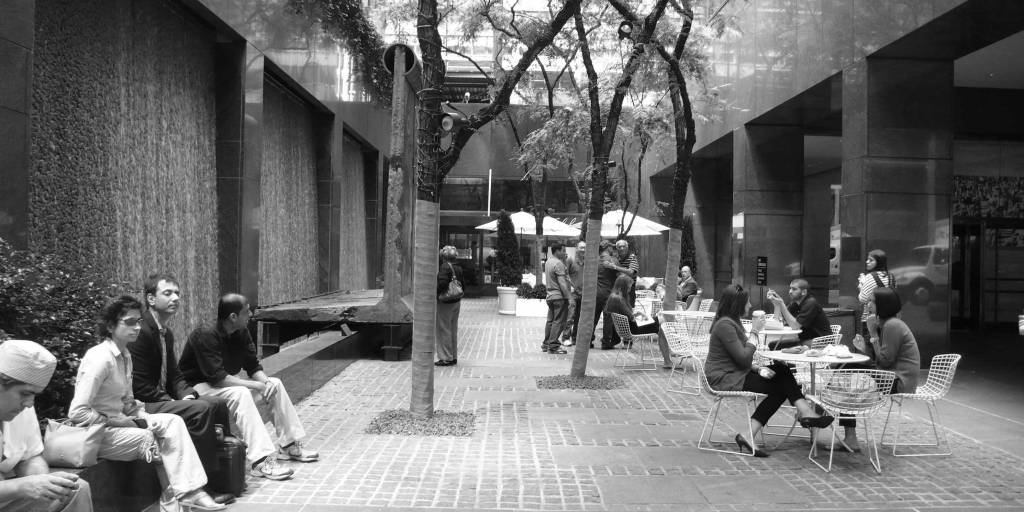
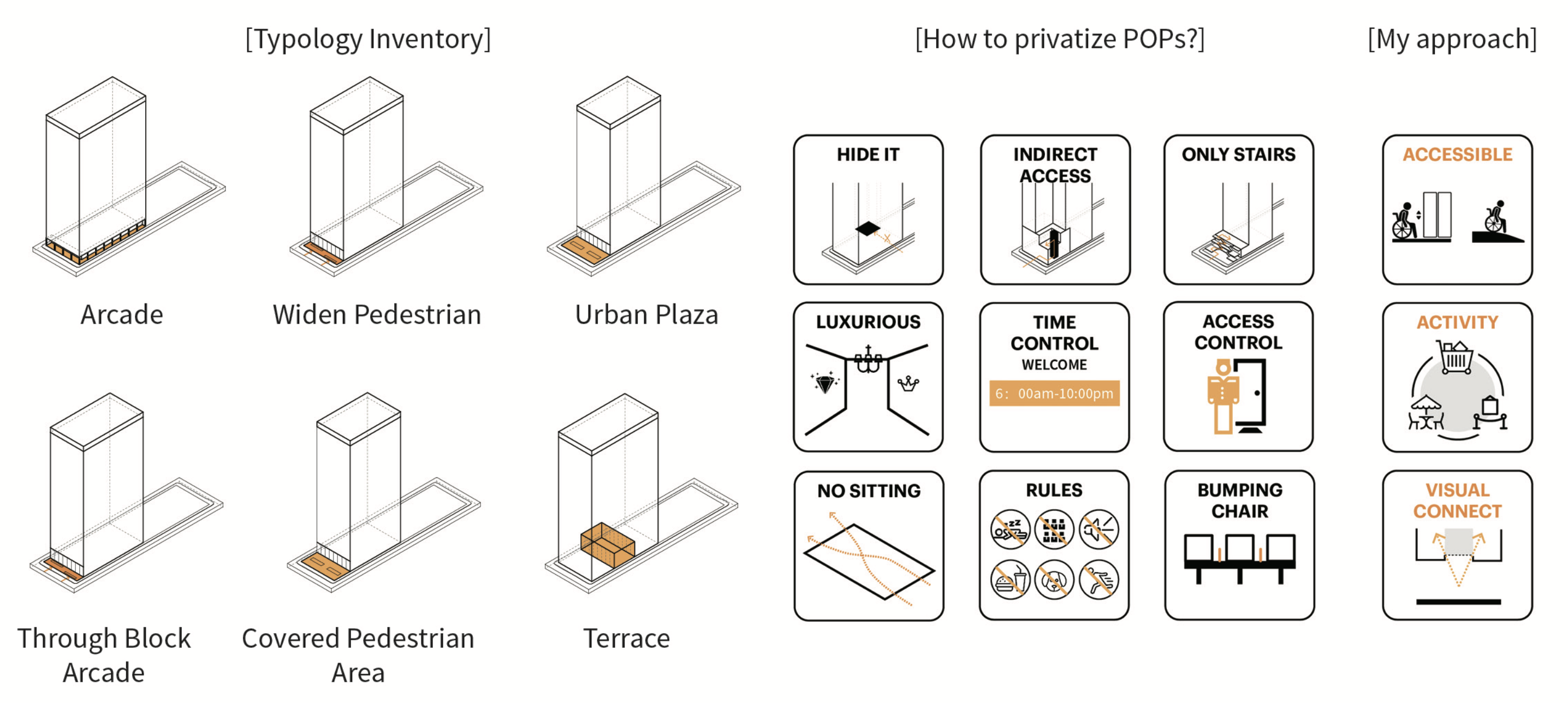
Privately owned public spaces, also known by the acronym POPS, are spaces dedicated to public use and enjoyment and are owned and maintained by private property owners in exchange for bonus floor area or waivers. In practice, however, many owners/designers seek to construct soft, invisible boundaries that discourage the general public from occupying the POPS.
To make a genuinely welcoming POP, it is crucial to make it accessible, activated by programs, and have visual connections with the private realm above.
Privately-owned Public Spaces (POPs)
 Claire Zhuo Pang